






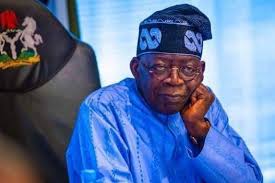
The Presidency has dismissed former Vice President Atiku Abubakar’s criticism of President Bola Tinubu’s economic and fiscal policies, describing his assessment as outdated and based on 2024 figures that fail to reflect improvements recorded in 2025 and 2026.
In a statement issued on Sunday by the Special Adviser to the President on Information and Strategy, Bayo Onanuga, the Presidency said Atiku’s comments ignored significant gains recorded under the Tinubu administration’s economic reform programme.
The response followed Atiku’s allegation that the Federal Government had pursued reckless borrowing, mismanaged proceeds from fuel subsidy removal, implemented punitive tax policies and failed to account for an alleged N7.98 trillion oil windfall.
Titled “Facts, Not Fear: A Point-by-Point Response to Atiku Abubakar on Nigeria’s Reform Journey,” the statement said Atiku’s arguments were anchored on “frozen snapshots of history” and did not take into account the country’s evolving economic realities.
According to the Presidency, Nigeria’s economy has rebounded significantly since the exchange rate adjustment, with the country’s dollar-denominated Gross Domestic Product (GDP) rising from about $253 billion after the currency reset to approximately $377 billion, representing a 49 per cent increase.
It added that the country’s naira GDP also expanded from about ₦314 trillion in 2024 to approximately ₦530 trillion, representing a 69 per cent increase driven by higher economic activity and price adjustments.
The Presidency maintained that although the reforms initially imposed economic hardship, they were necessary to correct long-standing structural distortions inherited from previous administrations, including the Obasanjo-Atiku government between 1999 and 2007.
Responding to Atiku’s criticism of the government’s borrowing profile, the Presidency argued that debt should be measured against the country’s economic capacity rather than its nominal value.
It stated that Nigeria’s debt-to-GDP ratio stands at about 40 per cent, which it said is lower than South Africa’s 85 per cent, Egypt’s 80 per cent, Kenya’s 75 per cent, Ghana’s 60 per cent, the United States’ 130 per cent and the United Kingdom’s 110 per cent.
The statement also noted that the country’s debt-service-to-revenue ratio had dropped from almost 100 per cent in December 2022 to below 60 per cent, attributing the improvement to stronger revenue generation and prudent debt management.
On the removal of fuel subsidy, the Presidency insisted that the policy had ended decades of fiscal waste and significantly increased allocations to states and local governments through the Federation Account Allocation Committee (FAAC).
It said the increased allocations had enabled sub-national governments to invest more in roads, schools, hospitals, salaries, pensions and social intervention programmes, adding that independent assessments by the World Bank had confirmed improvements in public revenues and capital expenditure following the reforms.
The Presidency further defended the administration’s tax reforms, saying they were designed to create a fairer tax system by reducing the burden on low-income earners and small businesses while ensuring wealthier individuals and profitable companies pay their fair share.
According to the statement, individuals earning ₦1 million or less annually and businesses with annual turnovers below ₦100 million are expected to benefit from lower tax obligations under the reforms.
On the health sector, the Presidency said the administration had revitalised more than 3,000 Primary Healthcare Centres, retrained 78,000 frontline health workers and established three cancer treatment centres while expanding similar facilities to 13 states.
It also highlighted achievements in the education sector, stating that more than 11,000 basic education projects had been executed, while the Nigerian Education Loan Fund (NELFUND) had disbursed over ₦303 billion to about 1.64 million students across 300 tertiary institutions.
The Presidency said ongoing investments in highways, rail lines, seaports, airports, power infrastructure, gas development, housing and digital connectivity had contributed to the country’s economic recovery and rising investor confidence.
Addressing Atiku’s claim of an ₦7.98 trillion oil windfall, the Presidency described the calculation as misleading, explaining that although Brent crude averaged about $90 per barrel in the first half of 2026 against a benchmark of $64.85, crude oil production averaged only 1.6 million barrels per day, below the projected 1.84 million barrels per day.
It added that part of Nigeria’s crude production had already been committed to servicing loans obtained to finance the former fuel subsidy regime, thereby reducing the volume of oil available for immediate government revenue.
The statement also noted that oil revenue calculations must account for production costs, the share due to oil companies and existing forward sale agreements rather than relying solely on crude prices and production volumes.
The Presidency further stated that inflation, which fell to 14.4 per cent in November 2025 before rising to 15.91 per cent due to disruptions caused by the Middle East conflict, is projected by analysts to decline to about 12 per cent before the end of the year.
It added that the Federal Government had rolled out several social protection programmes, including NG-CARES, HOPE and SOLID, valued at over $3 billion, alongside cash transfers targeted at 15 million households.
The Presidency urged Atiku and other opposition figures to focus on objective national discourse based on verifiable economic indicators rather than political rhetoric, insisting that the Tinubu administration’s reforms are laying the foundation for sustainable economic growth and long-term national development.




