



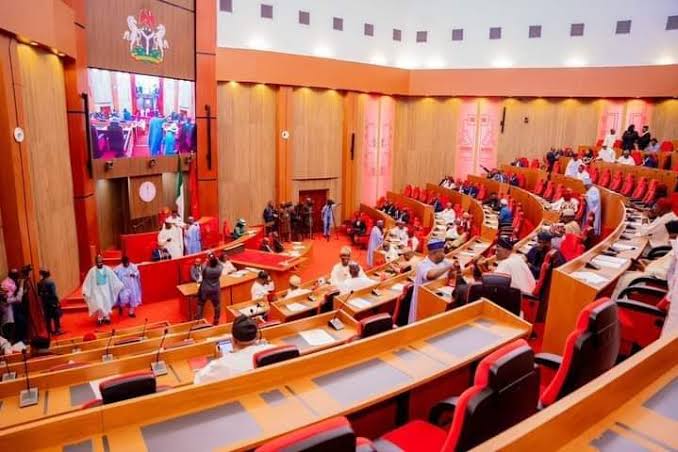
The Senate on Wednesday passed for second reading a bill seeking tougher penalties for the manufacture, importation, distribution and sale of counterfeit medicines and unwholesome processed foods, proposing up to 15 years imprisonment for offenders as part of efforts to curb the growing menace of fake drugs in the country.
The proposed legislation, titled Counterfeit Medical Products, Fake Drugs and Unwholesome Processed Foods (Prohibition and Control) Bill, 2026 (SB.951), is sponsored by the Senator representing Kwara North, Umar Suleiman.
It seeks to repeal the existing Counterfeit and Fake Drugs and Unwholesome Processed Foods Act and replace it with a more robust legal framework to address emerging threats such as online drug sales, cross-border trafficking and increasingly sophisticated counterfeiting operations.
Leading the debate on the general principles of the bill, Suleiman said the current law has become inadequate to tackle the evolving activities of counterfeit drug syndicates, warning that fake medicines continue to endanger lives and undermine public confidence in Nigeria’s healthcare system.
“This bill criminalises the production, importation, manufacture, transportation, distribution, sale, possession and facilitation of counterfeit medical products, fake drugs and unwholesome processed foods,” the lawmaker said.
He added that the proposed legislation is designed to protect Nigerians from preventable deaths and disabilities linked to counterfeit medicines while restoring confidence in the country’s pharmaceutical industry.
Beyond the proposed 15-year prison term, the bill prescribes stiff financial penalties, forfeiture of assets connected to counterfeit drug operations and mandatory compensation for victims or their families where fake medicines result in death or grievous bodily harm.
It also empowers courts to seal offending premises and bar convicted persons from engaging in pharmaceutical-related businesses.
The legislation further prohibits drug hawking and the sale of medicines in open markets, motor parks, roadside stalls, buses, ferries, unlicensed premises and illegal online platforms, which lawmakers identified as major channels for the circulation of counterfeit medicines.
To strengthen enforcement, the bill proposes expanded powers for the National Agency for Food and Drug Administration and Control (NAFDAC), including the deployment of advanced product tracking technologies and the establishment of a multi-agency task force comprising NAFDAC, the Nigeria Police Force, the Nigeria Customs Service, the Nigeria Immigration Service and the Pharmacy Council of Nigeria to combat counterfeit drug networks.
The proposed law also vests exclusive jurisdiction over counterfeit drug offences in the Federal High Court, provides for accelerated trial procedures and recognises electronic evidence in criminal proceedings to speed up prosecution of offenders.
Lawmakers overwhelmingly supported the bill during Wednesday’s plenary, describing the proliferation of fake medicines as a serious public health threat requiring stronger legal sanctions.
Following the debate, Senate President Godswill Akpabio referred the bill to the Senate Committee on Health (Secondary and Tertiary) for further legislative scrutiny and directed the panel to report back within the prescribed legislative period.
The bill comes amid renewed efforts by NAFDAC to eliminate counterfeit medicines from the Nigerian market.
The agency has repeatedly warned that fake and substandard drugs contribute significantly to preventable deaths and has intensified enforcement operations against manufacturers and distributors of counterfeit pharmaceutical products.