




The Economic and Financial Crimes Commission (EFCC) has disclosed that proceeds recovered from corruption and financial crimes are being deployed by the Federal Government to support key social intervention programmes, including the Nigerian Education Loan Fund (NELFUND) and the Consumer Credit Scheme.
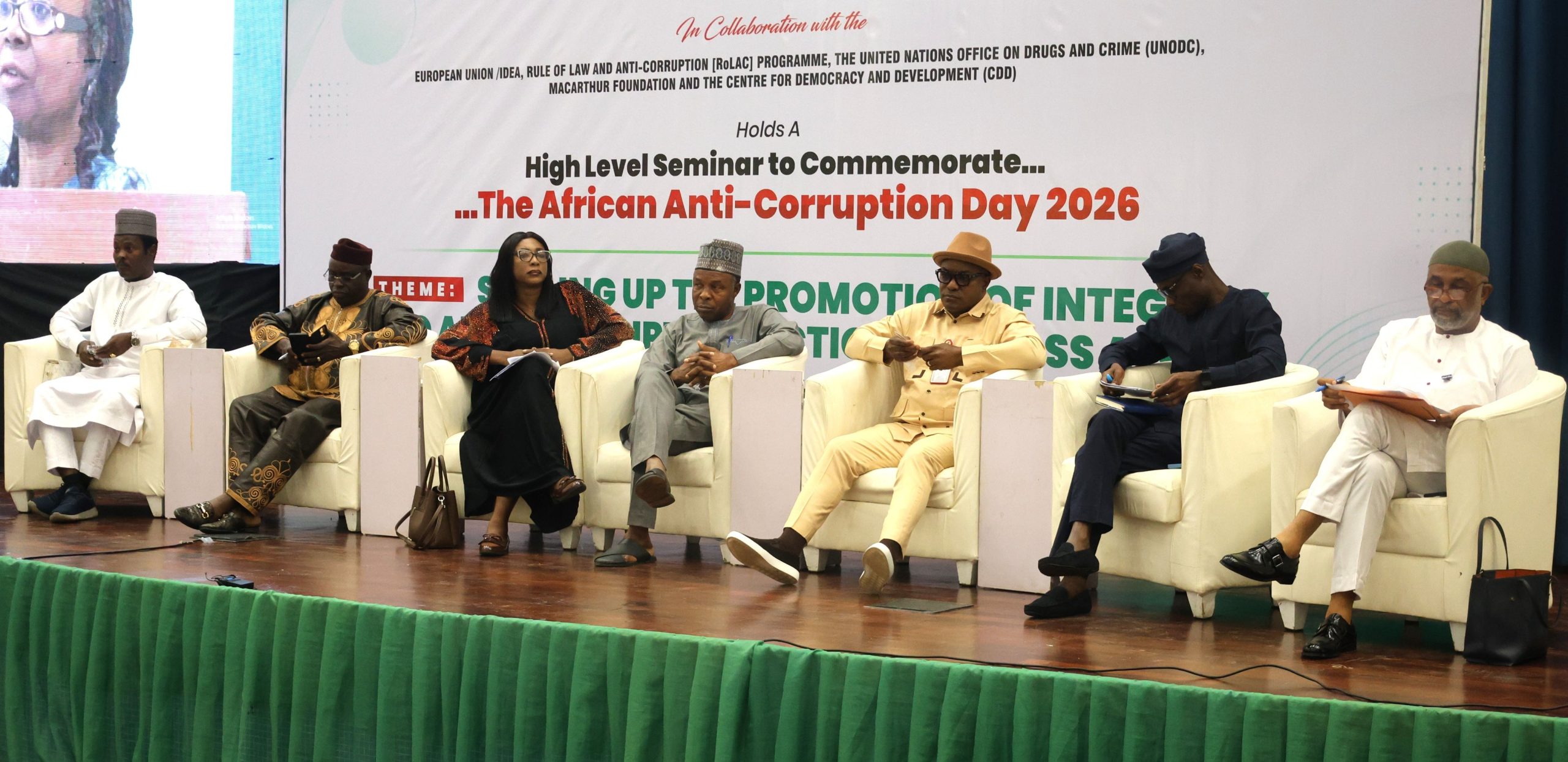
Executive Chairman of the EFCC, Ola Olukoyede, made the disclosure on Friday in Abuja while speaking at a high-level seminar themed “Scaling up the Promotion of Integrity and Anti-Corruption Actions Across Africa,” organised by the Inter-Agency Task Team to mark the 2026 African Anti-Corruption Day.
Represented by the Head of Administration and Records, Proceeds of Crime Management Department, Assistant Commander of the EFCC, Wananje Gwatana, Olukoyede said recovered proceeds of crime were now making a direct impact on the lives of ordinary Nigerians through government-backed empowerment and education initiatives.
“The recovered proceeds of crime by the Commission is felt even by vulnerable people.
The Federal Government recently approved some of the proceeds recovered by the Commission to fund the NELFUND and the Consumer Credit Scheme,” he said.
Olukoyede also praised the Proceeds of Crime Act (POCA) for transforming Nigeria’s asset recovery and management framework, noting that the legislation has strengthened transparency, improved accountability and reduced delays associated with the disposal of recovered assets.
According to him, the implementation of the law has streamlined the Commission’s asset recovery processes, provided a clear legal foundation for its operations and enhanced overall efficiency.
“The coming of POCA streamlined our activities and also gives us a legal backing to whatever we do. One of the things the Commission is doing at the moment, aside from the seizure, forfeiture, management and disposal process, is to shorten the turnaround time between forfeiture and disposal of assets,” he said.
The EFCC chairman explained that one of the challenges previously faced by the Commission was the deterioration of seized assets while legal proceedings were ongoing.
To address the issue, he said the Commission now disposes of assets that are susceptible to deterioration before annual disposal exercises and places the proceeds in escrow accounts pending the final determination of court cases.
“With the coming of POCA, what we do for assets that are susceptible to deterioration is that we sell even before the annual disposal because, in the Standard Operating Procedures, we have annual disposal of finally forfeited assets.
But if an asset is susceptible to deterioration, we sell and then put the proceeds in escrow pending the final determination of the case in court,” he added.
Olukoyede further revealed that the Commission has strengthened transparency in asset disposal by replacing physical auctions with electronic auctions and engaging professional asset management consultants to oversee forfeited properties.
According to him, the consultants are selected based on proven expertise, assigned assets within their areas of competence and required to submit quarterly performance reports detailing revenue generated from managed properties.
The EFCC boss said the reforms were aimed at ensuring greater accountability and maximising the value of recovered assets for the benefit of the Nigerian people.
In his goodwill message, Chairman of the Independent Corrupt Practices and Other Related Offences Commission (ICPC), Dr. Musa Adamu Aliyu (SAN), reaffirmed the agency’s commitment to promoting transparency, integrity and accountability across Africa.
Aliyu stressed that the continent’s aspirations for economic development, democratic governance and social transformation could only be achieved through strong institutions and effective anti-corruption mechanisms.
“Scaling up the promotion of integrity requires collective action. Governments, oversight institutions, the private sector, civil society organisations, development partners and citizens all have critical roles to play,” he said.
Also speaking, Chairman of the Code of Conduct Bureau (CCB), Abdullahi Usman Bello, said the Bureau remained committed to enforcing ethical standards in public service and promoting accountability among public officials.
He disclosed that the CCB had introduced reforms to enhance transparency, including the development of an online asset declaration system.
The event brought together anti-corruption agencies, government officials and stakeholders from across Africa to discuss strategies for strengthening integrity systems and combating corruption on the continent.