



Major opposition political parties have fixed August 31, 2026, for a crucial summit aimed at opening formal negotiations on a united political front ahead of the 2027 general election.
The meeting, being facilitated by the G100 political movement, is expected to bring together leaders and stakeholders of six opposition parties — the African Democratic Congress (ADC), Allied Peoples Movement (APM), National Democratic Congress (NDC), Peoples Democratic Party (PDP), Peoples Redemption Party (PRP) and Social Democratic Party (SDP).
Salihu Moh. Lukman, speaking on behalf of the G100, said the summit would provide a structured platform for the opposition parties to begin discussions on the principles, institutions and terms upon which they could cooperate ahead of the 2027 polls.
The summit is expected to hold in Abuja as opposition leaders intensify efforts to overcome divisions that have weakened previous attempts to present a formidable challenge to the ruling All Progressives Congress and President Bola Tinubu.
The latest development followed weeks of consultations between the G100 and leaders of the six political parties, including national chairmen, presidential candidates and other key stakeholders.
“Those consultations culminated in a shared briefing, A Framework for Opposition Cooperation and Coordination, which identified areas of convergence among the participating parties while recognising their distinct histories, identities and political interests,” Lukman said.
He stressed that the proposed cooperation was not necessarily aimed at dissolving the identities or structures of the participating parties.
“Cooperation does not require any party to disappear into another. The first question before party leaders is not who leads the ticket. It is what we are, together, prepared to do for this country,” he said.
Summit Shifted After Earlier Consultations
The August 31 meeting was initially scheduled for August 18 but was postponed to allow participating political parties more time for consultations.
The decision followed engagements between the G100, leaders of the six opposition parties and members of the Minority Caucus of the House of Representatives.
Reports indicated that the National Peace Summit earlier scheduled for August 18 was also among the reasons the opposition meeting was moved, with stakeholders agreeing that further consultations would make the proposed summit more productive.
The summit is expected to focus on creating a more formal structure for opposition cooperation rather than immediately deciding on a presidential candidate.
Among proposals expected to be discussed is the establishment of specialised working groups that could develop the framework and agreements required to institutionalise cooperation among the participating parties.
Opposition Reps Back Single Candidate Push
The planned summit comes days after the Minority Caucus in the House of Representatives threw its weight behind efforts to unite opposition parties ahead of the 2027 presidential election.
The caucus, following a meeting with the G100, urged opposition leaders and political parties to put aside individual ambitions and work towards presenting a common front.
The caucus warned that a fragmented opposition could repeat the circumstances of the 2023 presidential election, when major opposition candidates contested separately.
The leader of the House Minority Caucus, Frederick Agbedi, said opposition politicians must recognise the advantage of working together.
“There is strength in unity and the opposition should unite to ensure that we wrest power from the APC in 2027,” Agbedi said.
He added that Nigeria’s current political and economic challenges required opposition leaders to focus more on providing Nigerians with a credible alternative than engaging in internal political battles.
Atiku, Obi Among Opposition Figures Expected
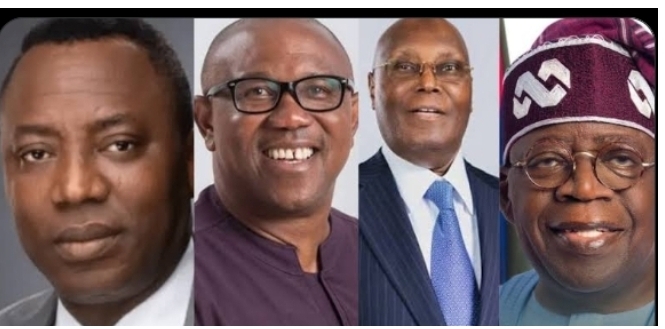
The summit is expected to attract prominent opposition figures, including former Vice-President Atiku Abubakar and former Anambra State Governor Peter Obi, alongside leaders and stakeholders from the participating political parties.
The G100 has maintained that its role is to facilitate discussions rather than impose decisions on any of the political parties.
Any agreement reached, it said, would remain subject to the constitutional processes and decisions of the individual parties.
The group’s efforts have centred on concerns that the opposition’s inability to forge a common political platform could once again give the ruling APC a major advantage in the 2027 presidential election.
Lukman has repeatedly argued that the task before opposition leaders goes beyond the search for a presidential candidate.
According to him, the proposed cooperation must be built around a shared commitment to addressing Nigeria’s challenges and offering voters a credible political alternative.
The August 31 summit is therefore expected to test the willingness of the country’s major opposition parties to move beyond political differences and personal ambitions in pursuit of a common strategy for the 2027 general election.