




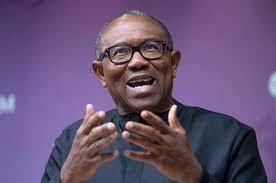
The presidential candidate of the Nigeria Democratic Congress, Peter Obi, has challenged Nigerians to demand a country where citizens can meet their basic needs without depending on relatives living abroad.
Obi said his recent appeal to Nigerians in the United Kingdom had been misinterpreted, insisting that he never asked diaspora communities to stop sending money to their families in Nigeria.
In a statement posted on his X account on Tuesday, the former Anambra State governor said his remarks were aimed at drawing attention to the economic difficulties that have left many households dependent on financial assistance from relatives overseas.
He accused political opponents of taking his comments out of context, despite an earlier clarification from his media office.
“Even though my media office has issued a responsible clarification on the situation, I still find it necessary to add my voice to address the distortion of my message by political opponents,” he wrote.
Obi acknowledged the important role played by Nigerians abroad in supporting households across the country, saying their remittances helped families cope with the costs of education, medical treatment, housing and daily necessities.
He described their contributions as worthy of recognition rather than criticism.
“I deeply appreciate Nigerians in the diaspora who work tirelessly and make enormous sacrifices to support their families back home. Their remittances pay for school fees, hospital bills, rent, and feeding expenses. Their patriotism and sacrifices deserve our profound respect,” he said.
However, the NDC candidate maintained that the continued reliance on money sent from abroad highlighted the need for fundamental improvements in Nigeria’s economy and public services.
“I never asked them to abandon their loved ones. My concern is that Nigeria should not remain a country where millions depend on relatives abroad for basic survival,” Obi stated.
He argued that a functional economy should provide citizens with the means to support themselves and their dependants through employment, accessible healthcare, quality education and other economic opportunities.
“Our goal must be to build a nation that provides jobs, affordable healthcare, quality education, and economic opportunities for its citizens,” he said.
Reaffirming his position, Obi said the controversy surrounding his comments would not distract from his call for better governance and improved living standards.
“Political opponents may twist my message, but the truth remains clear: I am not asking Nigerians abroad to abandon their families. I am advocating for a Nigeria that will no longer abandon its own people,” he wrote.
He ended his statement by extending his goodwill to Nigerians both at home and overseas, saying, “God bless Nigerians at home and abroad. God bless Nigeria.”
The controversy arose from Obi’s address to Nigerians in Manchester on Sunday, where he urged diaspora members to resist financial demands from relatives at home.
At the town hall meeting, he questioned a situation in which Nigerians abroad were repeatedly called upon to provide financial assistance to people struggling to meet their basic needs.
“You have people at home in Nigeria today who are begging you for money. Tell them no!” he told the gathering.
His remarks attracted mixed reactions, with some interpreting them as an instruction to withhold financial support from family members.
Obi’s clarification has since centred the debate on a broader question: how Nigeria can build an economy in which families no longer have to rely heavily on relatives abroad to survive.