




Former President Olusegun Obasanjo has disagreed with President Bola Tinubu over the Federal Government’s borrowing policy, warning that excessive public debt could undermine the future of generations of Nigerians.
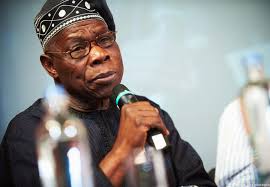
Obasanjo, who spoke on Friday at the Ajibosin Platform in Abeokuta, Ogun State, described debt as more destructive than leprosy, arguing that its consequences extend beyond individuals to affect entire generations.
“And for anybody to say debt is no leprosy, is absolute nonsense. Debt is worse than leprosy. Because leprosy destroys only one person. Debt destroys generations,” he said.
The former President’s remarks followed Tinubu’s recent request to the National Assembly for approval to secure fresh external loans amounting to $20.52bn and €1.045bn under the Federal Government’s 2026–2027 Supplementary External Borrowing Plan.
The request, conveyed in a letter read by Senate President Godswill Akpabio during plenary, is intended to fund projects in infrastructure, agriculture, healthcare, education, water supply, security, job creation and financial management reforms. It was subsequently referred to the Senate Committee on Local and Foreign Debts for consideration.
Tinubu had argued that additional borrowing was necessary to address the country’s infrastructure deficit and bridge funding gaps affecting development projects.
The President had earlier defended his administration’s borrowing policy in April, insisting that taking loans was not necessarily harmful if the government could repay them.
“If we have to borrow, we borrow. Borrowing is not leprosy, we just have to work hard to be able to pay for it,” Tinubu said during a meeting with Plateau State leaders at the State House.
However, Obasanjo challenged that position, warning that the burden of accumulated debt could have far-reaching implications for Nigerians yet unborn.
The former President also expressed concern about the depreciation of the naira, recalling that the currency was stronger against the dollar when he established his farm 47 years ago.
He said the exchange rate at the time stood at one naira to $1.85, contrasting it with the current rate, which he put at about N1,500 to the dollar.
Questioning Nigeria’s economic performance over the decades, Obasanjo said, “When I started my farm, 47 years ago, naira to the dollar was one naira to $1.85. Forty-seven years ago. What has Nigeria done in 47 years that we now have 1,500 naira to the dollar? What have we done?”
He also questioned the knowledge and capacity of political leaders to develop practical solutions to the country’s challenges and improve the living conditions of citizens.
“What do our leaders know? And what do they not know? And from what they know, what can they do for us?” he asked.
Obasanjo further criticised Nigeria’s dependence on the World Bank and the International Monetary Fund, arguing that the institutions were established before the country gained independence and that their economic prescriptions might not adequately address Nigeria’s peculiar circumstances.
“World Bank and IMF were not designed for us. They were not built by us. They were built before we became independent. And that’s the people who would determine what we do,” he said.
He cautioned that Nigeria should not rely unquestioningly on external economic prescriptions without considering the country’s specific needs, circumstances and development priorities.
The former President spoke at the forum, which was themed, “Leveraging Artificial Intelligence to Solve Grassroots Problems and Accelerate National Development.”