




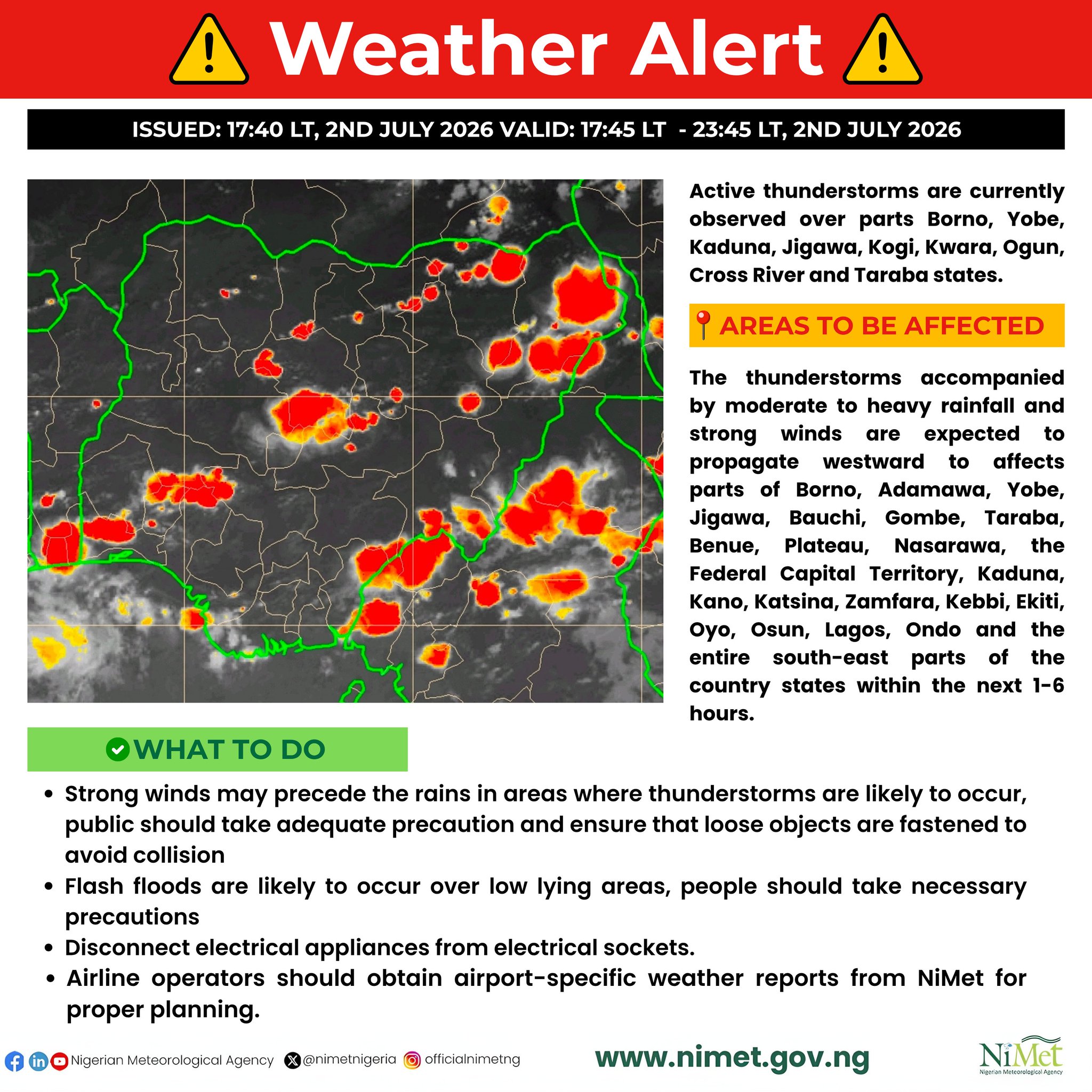
The Nigerian Meteorological Agency (NiMet) has issued a weather alert warning of active thunderstorms across several parts of the country, with the weather system expected to spread to more states within the next six hours.
In an advisory issued on Wednesday, NiMet said thunderstorms were already being experienced in parts of Borno, Yobe, Kaduna, Jigawa, Kogi, Kwara, Ogun, Cross River and Taraba states.
The agency warned that the storm system is expected to move westward, affecting additional states including Adamawa, Bauchi, Gombe, Benue, Plateau, Nasarawa, Kano, Katsina, Zamfara, Kebbi, Ekiti, Oyo, Osun, Lagos and Ondo, as well as the Federal Capital Territory (FCT) and the entire South-East region.
According to NiMet, residents in the affected areas should prepare for strong winds, moderate to heavy rainfall and frequent lightning activities.
The agency noted that the adverse weather conditions could trigger flash flooding in low-lying and flood-prone communities, while strong winds may lead to falling tree branches, damage to unsecured objects and possible power outages.
NiMet also warned that reduced visibility and slippery road conditions could pose risks to motorists and other road users.
“Strong winds may precede rainfall, while moderate to heavy rainfall accompanied by frequent lightning is expected across the affected areas,” the agency stated.
As part of precautionary measures, NiMet advised residents to secure loose outdoor objects, avoid taking shelter under tall trees and weak structures, and disconnect electrical appliances during thunderstorms to prevent damage from lightning strikes.
Motorists were urged to drive cautiously during periods of heavy rainfall, while airline operators were advised to obtain airport-specific weather reports from NiMet to aid effective flight planning and ensure passenger safety.
The agency further encouraged Nigerians to remain vigilant and monitor official weather updates and advisories for timely information on changing weather conditions.
The warning comes as Nigeria continues to experience increased rainfall associated with the peak of the 2026 rainy season, raising concerns over flooding and severe weather incidents in vulnerable communities across the country.