






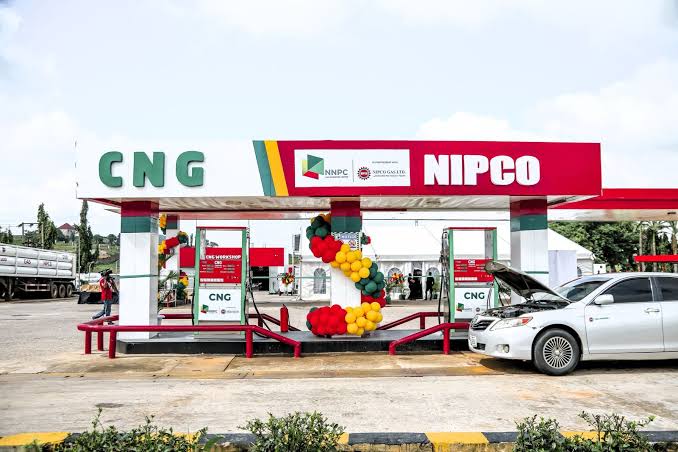
The Lagos State Government has announced plans to increase the number of Compressed Natural Gas refuelling stations across the state to 19 by the first quarter of 2027, as part of efforts to ease congestion at existing facilities and encourage the adoption of alternative fuel.
The government also plans to commission five additional CNG stations in November 2026, with a long-term target of establishing 29 facilities by the first quarter of 2028.
The Managing Director of Ibile Oil and Gas Corporation, Tayo Gbajumo, disclosed this on Thursday during a media briefing ahead of the 2026 Lagos Energy Summit scheduled for November 10 to 12.
Gbajumo said the state government, through the Ministry of Energy and Mineral Resources, was expanding CNG infrastructure across different parts of Lagos to improve accessibility for motorists and transport operators.
He disclosed that three CNG stations were currently operational in Agege, Ojota and Oshodi, while five additional facilities were expected to be commissioned by November 12.
“Regarding CNG, the ministry is working hard to develop infrastructure across the state. By Q1 2027, we will have 19 stations across the state. The idea is to continue expanding the network as we go further,” he said.
He added that the government was targeting another 10 stations by the first quarter of 2028 to extend coverage to more locations across the state.
“Hopefully, by Q1 2028, we will have an additional 10 stations, which will provide coverage across different locations in the state,” Gbajumo stated.
The expansion comes amid increasing interest in CNG as a cheaper alternative to petrol following rising fuel costs. However, inadequate refuelling infrastructure has continued to discourage adoption, with motorists experiencing lengthy queues at existing stations.
Acknowledging the challenge, Gbajumo said expanding the infrastructure remained critical to reducing waiting times and improving access to the alternative fuel.
“Infrastructure is the most important thing. That is why there are long queues, but we are trying to reduce them by increasing the infrastructure,” he said.
On vehicle conversion, the Ibile Oil and Gas chief disclosed that converting a vehicle to run on CNG costs between N700,000 and N1m, depending on the equipment and standards adopted.
He also said filling a 60-kilogramme CNG tank costs approximately N5,000 and could provide a driving range of about 200 kilometres, depending on usage.
Gbajumo added that the corporation uses European-standard equipment, advising motorists to ensure that vehicle conversions are handled by certified engineers to guarantee safety.
Meanwhile, the Lagos State Commissioner for Energy and Mineral Resources, Biodun Ogunleye, said the forthcoming Lagos Energy Summit would provide an opportunity for stakeholders to examine developments, opportunities and challenges in the energy sector.
The summit, scheduled for November 10 to 12, is expected to attract regulators, investors, energy experts, electricity distribution companies and innovators to discuss electricity supply, renewable energy, metering, energy affordability and alternative transportation, including CNG and electric vehicles.
Ogunleye said the state was working towards developing a secure, interoperable and efficient energy framework that would improve electricity access and reduce dependence on conventional fuels.
Similarly, the Permanent Secretary of the Ministry of Energy and Mineral Resources, Ibilola Kasunmu, said the summit would focus on practical solutions to Nigeria’s electricity challenges, with emphasis on translating discussions into actionable outcomes.
The state government said the planned expansion of CNG infrastructure was part of its broader strategy to improve energy access, promote alternative fuels and strengthen the state’s energy sector.




