




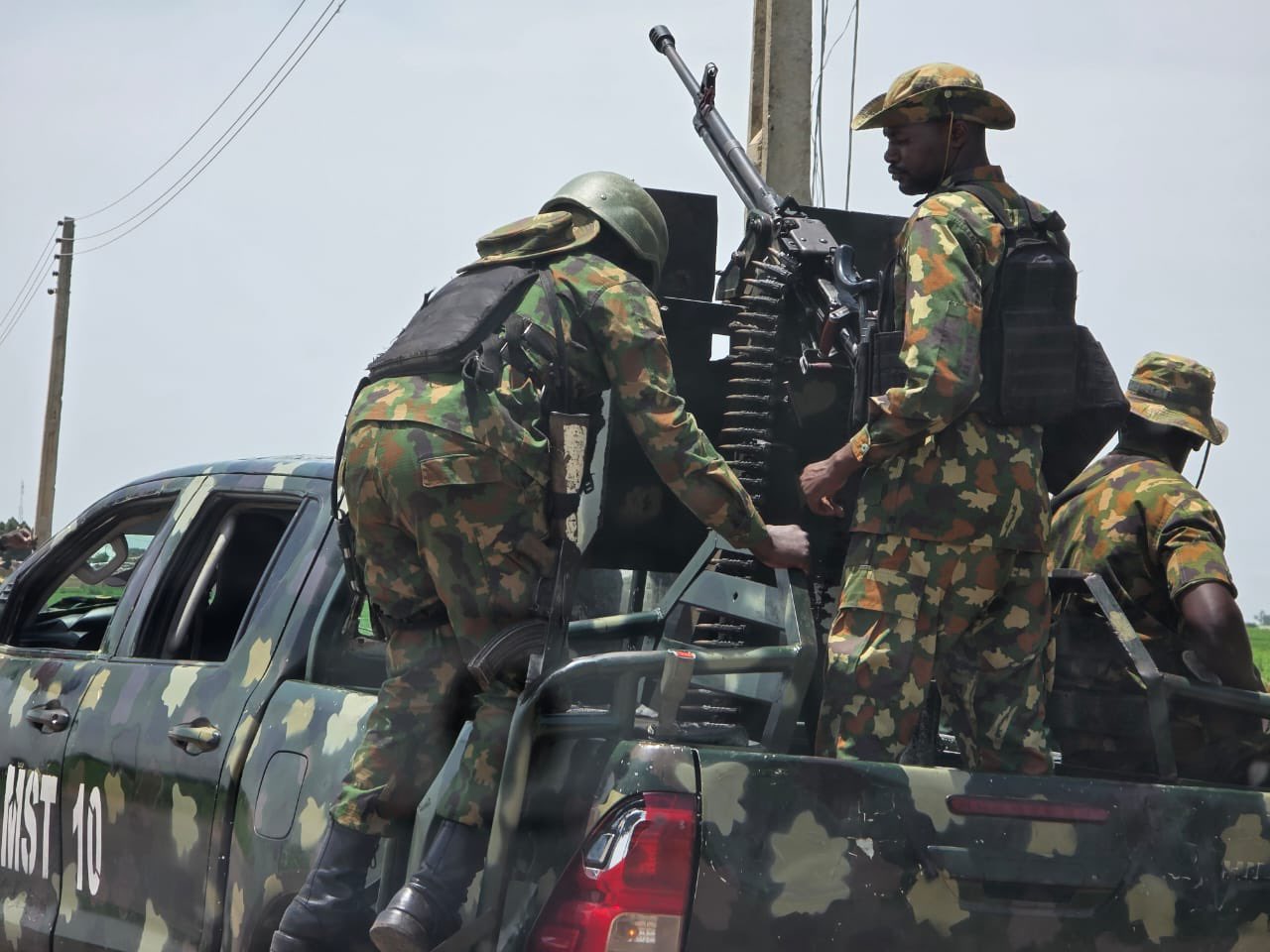
No fewer than 31 state governments spent an estimated N252.26bn on security and the fight against criminality between January and June 2026, despite continued killings, kidnappings, banditry and other violent crimes across the country.
An analysis of the states’ first and second-quarter budget performance reports obtained from Open Nigerian States, a BudgIT-backed repository of government budget data, showed that Kogi recorded the highest expenditure at N34.67bn.
Plateau followed with N23.69bn, while Bauchi spent N22.35bn, placing the three states at the top of the security expenditure table. Collectively, they accounted for about N80.70bn, or 32 per cent, of the total expenditure captured.
Other states with significant spending included Bayelsa, N17.49bn; Ekiti, N14.83bn; Anambra, N13.40bn; Sokoto, N11.27bn; Ondo, N10.54bn; Kaduna, N10.37bn; and Kebbi, N10.14bn.
The expenditure covered security equipment, homeland security personnel, security votes and operations, ministries of security and special advisers, as well as security trust funds.
The combined spending represents a sharp increase from the N75.84bn recorded in 2025 across the states covered in the broader dataset. However, a like-for-like comparison of 22 states with available year-on-year figures showed expenditure rising from about N75.84bn to N144.44bn, representing an increase of approximately 90.5 per cent.
Security votes and related homeland security expenditure accounted for the largest category, rising from N47.67bn to N135.61bn. Spending on ministries of security and special advisers also increased from N14.95bn to N42.15bn, while security trust fund expenditure rose from N6.82bn to N10.53bn.
The huge allocations came amid continued security challenges nationwide. The National Human Rights Commission reported 651 kidnapping incidents and 492 killings between January and March 2026, with the North-Central, North-West and North-East among the worst affected regions.
The security situation remained severe in the second quarter, with a SARI Global report indicating that 792 people were killed in 882 security incidents across the 36 states and the Federal Capital Territory in June alone.
Official mid-year operational figures also showed that military and other security agencies conducted about 14,000 operations during the first half of the year, killing 1,597 terrorists and insurgents and rescuing 1,516 kidnapped victims.
The figures have consequently raised questions about whether the increased state-level security spending is translating into better security outcomes, particularly in states that continue to experience attacks, kidnappings and communal violence.
Retired Brigadier-General Bashir Adewinbi commended the increased funding but urged Nigerians to allow the government time to demonstrate its effectiveness.
“It is commendable that they are coming together for the first time to take the bull by the horns. Naturally, while some officials may be sincere, others may not be, and some might have been corrupted along the way,” he said.
Adewinbi said dedicated funding could help security agencies acquire technology and other resources required to confront terrorism and other threats, but stressed that the effectiveness of the initiative would ultimately depend on implementation.
Former Assistant Inspector-General of Police, Wilson Inalegwu, however, advocated result-based budgeting, urging governors to stop making huge lump-sum allocations without clear plans for reducing crime.
“I don’t understand when governors just slam or spend N200bn, whatever amount, on security. I believe in process,” Inalegwu said, arguing that every Commissioner of Police should prepare an annual policing plan identifying specific threats, required resources and measurable targets.
He said governors should periodically assess crime statistics and hold police authorities accountable for meeting agreed targets, adding that funding should be tied to clearly defined security needs such as patrol vehicles, surveillance cameras, drones and community policing.
“I would prefer that it is broken down, and then the Governor and the Commissioner of Police are achieving results, bringing the dividends of democracy to their population through careful planning,” he added.
Also, retired Brigadier-General George Emdin said the expenditure should not be viewed solely as a response to banditry and kidnapping, noting that state security votes had existed for decades and that insecurity required different strategies.
“Security in Nigeria is multidimensional. You cannot use one tactic or strategy to defeat everyone,” Emdin said.
Civil society groups also demanded greater transparency in the use of the funds. The Executive Chairman of the Centre for Anti-Corruption and Open Leadership, Debo Adeniran, said citizens had the right to demand accountability for security expenditure, regardless of the confidential nature of some security operations.
“We have the right to ask for accountability. Is the spending going to the right quarters? Are security personnel being well paid?” Adeniran asked.
The figures show that security financing has expanded significantly at the state level, but the continuing violence across the country means governments face growing pressure to demonstrate that increased spending is producing measurable improvements in the safety of citizens.