





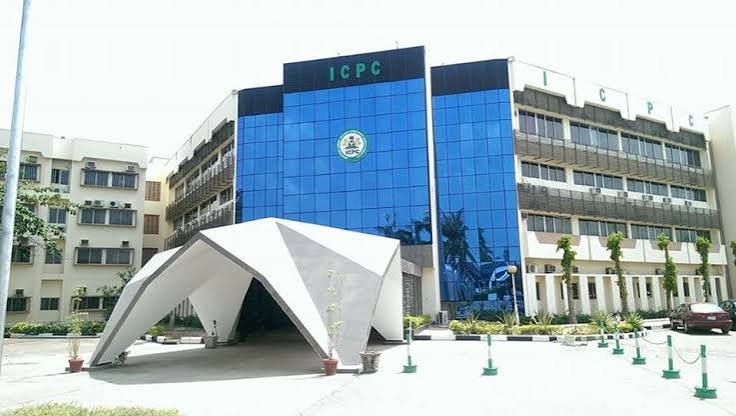
The Independent Corrupt Practices and Other Related Offences Commission (ICPC) has recovered more than N5.3bn from the review of local government accounts in seven states and the Federal Capital Territory, amid plans to introduce mandatory online disclosure of financial records across Nigeria’s 774 councils.
The commission said the initiative would enable residents to monitor government allocations, revenue, expenditure and procurement activities at the grassroots, while strengthening public scrutiny of local government finances.
ICPC Chairman, Dr Musa Adamu Aliyu (SAN), disclosed this on Thursday in Lafia, Nasarawa State, during the launch of the ICPC-National Information Technology Development Agency (NITDA) Local Government Websites Pilot.
The project, which commenced in Nasarawa, is expected to be extended to all local government areas across the country.
Aliyu said the recovery of the funds exposed financial irregularities in local government administration and underscored the need for stronger accountability mechanisms, particularly following the Supreme Court’s July 2024 judgment granting councils financial autonomy.
He maintained that direct access to statutory allocations must be accompanied by transparency in the management and utilisation of public funds.
“Autonomy brings responsibility. Funds that now flow directly to the councils must be spent openly and for the benefit of the people,” he said.
Under the initiative, all 774 local government councils will be required to operate websites using a standardised template developed through the ICPC’s Accountability and Corruption Prevention Programme for Local Governments.
The platforms will provide information on council budgets, statutory allocations, internally generated revenue, expenditure, audit reports, debts, public procurement and personnel records.
They will also feature channels for citizen engagement, whistleblowing and disclosure of anti-corruption measures.
The ICPC chairman said the digital platforms would give residents access to information on how public funds were managed and enable journalists and relevant oversight institutions to identify suspicious financial activities.
“When these records are published regularly, citizens can follow the money, the media can ask informed questions and oversight institutions can detect risks early, before they become losses,” Aliyu stated.
He urged council chairmen to designate officers responsible for managing the websites and ensuring that information uploaded was accurate and regularly updated.
“A website is only as good as the information on it; one that is launched and then abandoned will only disappoint the people,” he warned.
Aliyu stressed that the commission’s intervention was designed to prevent corruption and promote responsible governance rather than target local government officials.
He added that experiences from the Nasarawa pilot would inform the nationwide implementation of the programme.
“Transparency is not an event. It is a habit that will lead to accountability,” he said.
In his remarks, the Director-General of NITDA, Kashifu Inuwa Abdullahi, said the initiative would address the difficulties residents encounter in obtaining information about government activities, particularly those living in remote communities.
He illustrated the problem with the example of a resident who might have to travel more than 60 kilometres to a local government headquarters simply to obtain information about an approved community project or submit a complaint.
“We are in a digital age. Our people are online; therefore, government needs to be online to serve them better,” Abdullahi said.
He identified improved governance, stronger citizen participation and expanded economic opportunities as the major objectives of the programme.
The NITDA chief said the agency would provide technical standards, develop website templates and train citizens, while encouraging councils to engage local technology professionals to maintain their platforms.
He further disclosed that NITDA had committed to registering domain names, developing and hosting websites for all 774 local government areas for at least one year.
“Our ambition is not 774 websites. It is 774 digitally empowered local governments delivering better experience to millions of Nigerians,” he said.
Flagging off the project, Nasarawa State Governor, Abdullahi Sule, appointed the Nasarawa State Information Technology and Digital Economy Agency as the technical lead for the initiative in the state.
Sule directed local government authorities to ensure that information published on their websites was accurate, current and verified before being made available to the public.
He said the success of the programme would be determined by the quality and consistency of information provided rather than the launch ceremony.
The governor also argued that public disclosure of council allocations would eliminate excuses by local government authorities over delays in paying workers’ salaries on the grounds that statutory funds had not been released.
However, he challenged the ICPC and NITDA to extend the digital transparency programme to state governments to enable Nigerians to monitor funds intended for local government administration.
Sule subsequently offered Nasarawa State as the first state to embrace the proposed disclosures.
The Emir of Lafia, Justice Sidi Bage Muhammad I (retd.), commended the ICPC, NITDA and the Nasarawa State Government for introducing the initiative.
Similarly, the Speaker of the Nasarawa State House of Assembly, Danladi Jatau, pledged the legislature’s support, noting that the Constitution empowered the Assembly to exercise oversight over local government finances.
The ceremony, held at the Government House Banquet Hall in Lafia, was themed, “Deepening Transparency and Accountability at the Grassroots through Digital Disclosure.”
The launch was followed by a technical session on the standardised website template designed for local government councils.
The initiative builds on the ICPC’s Accountability and Corruption Prevention Programme for Local Governments, introduced after the Supreme Court’s landmark judgment of July 11, 2024, on local government financial autonomy.
In the judgment delivered in a suit instituted by the Federal Government against the 36 state governments, the apex court directed that statutory allocations due to democratically elected local government councils from the Federation Account be paid directly to them.
The court also declared the continued administration of local governments by unelected caretaker committees unconstitutional, insisting that councils must be governed by democratically elected officials.
However, concerns have continued over the management of council finances, transparency in the utilisation of allocations and the capacity of local governments to deliver essential services despite the ruling.
The ICPC subsequently commenced a review of local government accounts in seven states and the FCT to identify financial irregularities, recover mismanaged public funds and strengthen accountability mechanisms.
The commission said the recovery of more than N5.3bn from the exercise had reinforced the need for digital platforms that would allow citizens and oversight institutions to monitor public finances at the grassroots.