






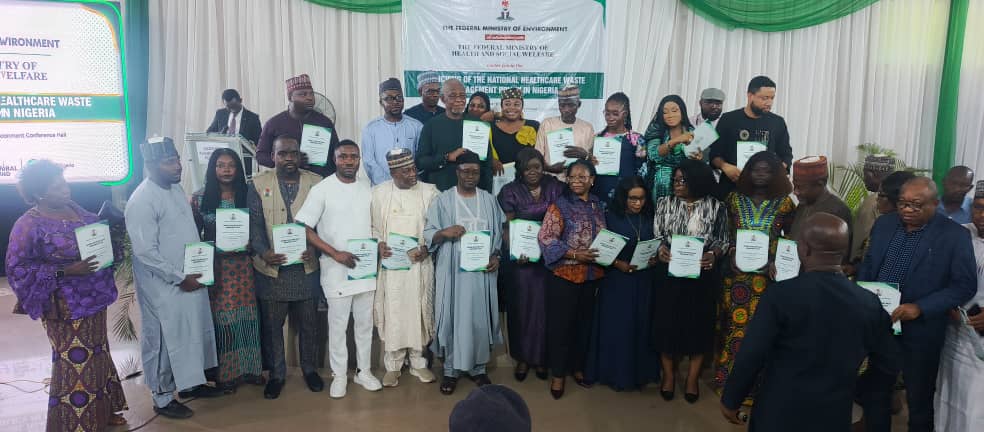
The Federal Government has called for stronger healthcare waste management practices across the country to prevent environmental pollution and protect healthcare workers, patients and surrounding communities.
The Minister of Environment, Balarabe Abbas Lawal, made the call through the Permanent Secretary of the ministry, Dr Salihu Usman, who represented him at the launch of the revised and updated National Healthcare Waste Management Policy in Abuja.
Delivering the keynote address, Usman stressed the need to ensure that healthcare delivery does not expose individuals and communities to avoidable health and environmental risks.
He explained that healthcare facilities generate different categories of waste, including general, infectious, sharps, pathological, pharmaceutical, chemical and radioactive materials, warning that improper handling and disposal could endanger healthcare workers, patients and the environment.
The Permanent Secretary cited findings from a 2023 capacity assessment which revealed significant shortcomings in existing healthcare waste management practices, underscoring the need for a comprehensive review of the national policy.
He said the revised policy followed a multi-stakeholder consultation and review process, which also produced a costed five-year Strategic Action Plan approved by the Federal Executive Council on August 21, 2026.
According to the Minister, effective implementation of the policy would require increased investment in waste management infrastructure, improved training for healthcare workers, strict regulatory compliance and greater accountability from public and private sector stakeholders.
He also emphasised the need for coordinated action among the Federal, State and Local Governments to ensure compliance with Nigeria’s national and international environmental obligations, particularly under the Basel Convention.
Lawal called on all stakeholders and members of the Healthcare Waste Management Technical Working Group to demonstrate commitment to the successful implementation of the revised policy.
He said the initiative should be viewed as a collective responsibility towards protecting human lives, preventing pollution and preserving the environment for future generations.




