




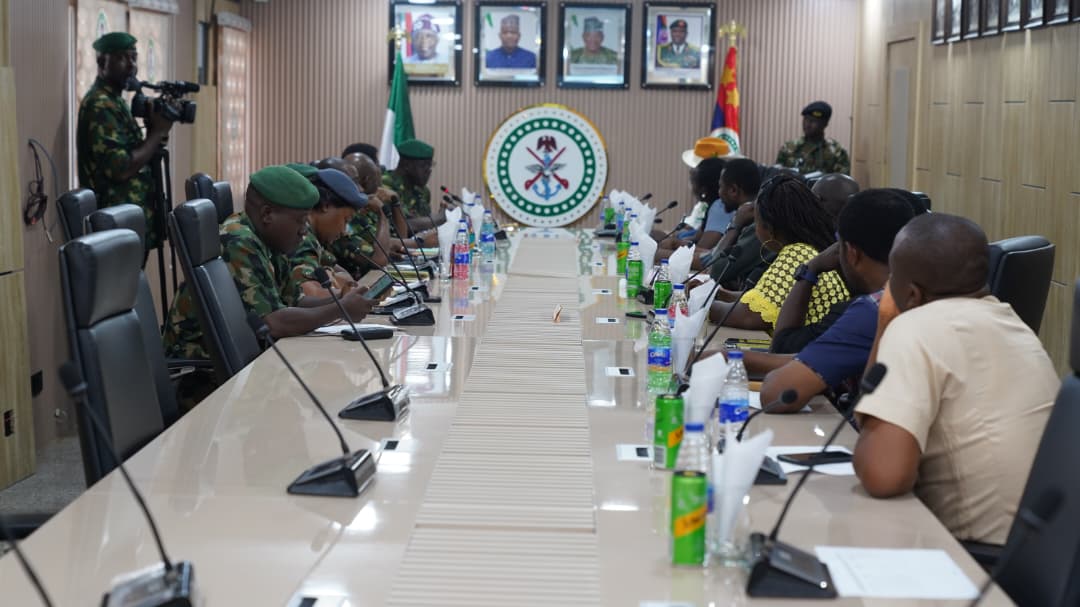
The Chief of Defence Staff (CDS), General Olufemi Oluyede, has called on defence journalists to sustain their support for the Armed Forces of Nigeria’s counter-terrorism operations through responsible, accurate and patriotic reporting.
Oluyede made the appeal on Friday during a courtesy visit by members of the Defence Correspondents Association of Nigeria (DECAN) to the Defence Headquarters in Abuja.
The CDS was represented by the Director of Defence Information, Major-General Sumaila Uba.
According to the CDS, the media remains a critical partner in the country’s efforts to combat terrorism, insurgency and other security threats, stressing that defence correspondents play a strategic role in bridging the gap between the military and the public.
“I am aware of what DECAN is doing in supporting our counter-terrorism efforts. I urge you to continue supporting the efforts of the Armed Forces,” Oluyede said.
Speaking on behalf of the Defence Headquarters, Maj.-Gen. Uba commended defence correspondents for their professionalism and commitment to reporting military and security issues in a manner that promotes national interest and safeguards national security.
He noted that the military values its relationship with the media, describing journalists as strategic stakeholders in fostering public confidence and projecting the sacrifices and achievements of troops engaged in various operations across the country.
“Your responsibility goes beyond reporting events. You serve as an important bridge between the military and the Nigerian public by providing factual, balanced and responsible information on defence and security matters,” Uba said.
The defence spokesman warned that the growing threat of misinformation, disinformation, social media manipulation and the misuse of artificial intelligence has heightened the need for accurate and verified reporting.
He urged journalists to cross-check information through official military channels before publication, noting that false or misleading reports could undermine national security efforts and embolden criminal and terrorist groups.
“Responsible journalism strengthens national security by denying adversaries the opportunity to exploit false narratives designed to create fear, erode public confidence or damage the reputation of our Armed Forces,” he stated.
Uba also cautioned against the publication of classified military documents or sensitive operational details that could compromise ongoing operations or endanger troops.
“Whenever classified information comes into your possession, please verify it with the appropriate authorities before publication. Ultimately, safeguarding sensitive military information is in Nigeria’s collective interest,” he added.
The Director of Defence Information assured journalists that the Defence Headquarters would continue to deepen its engagement with the media through regular press briefings, interviews, operational tours and capacity-building programmes, while maintaining the confidentiality required for military operations.
Earlier, DECAN President, Odita Sunday, described the relationship between the Defence Headquarters and defence correspondents as a strategic partnership aimed at strengthening national security through credible journalism.
“While our gallant troops defend the nation’s territorial integrity on the battlefield, we complement their efforts by informing, educating and shaping public understanding through accurate, balanced and responsible reportage,” he said.
Odita commended the military for granting journalists access to operational theatres across the country, saying the initiative has enhanced the credibility and accuracy of reports on military activities and security operations.
He appealed for more frequent operational briefings to enable defence correspondents to verify information promptly and effectively counter misinformation, disinformation and hostile propaganda.
The DECAN president also disclosed that the association was finalising arrangements to launch its official publication, The Defence Correspondent, a magazine dedicated to documenting the activities, operations and achievements of the Armed Forces of Nigeria and other defence institutions.
He further appealed to the Defence Headquarters to support the publication and consider establishing a dedicated Defence Correspondents Press Centre within one of its civil-military estates in Abuja.
According to him, the proposed centre would provide a functional workspace for journalists and serve as a central hub for engagement between defence correspondents and military authorities.
The visit underscored the growing collaboration between the military and the media in promoting national security, combating misinformation and ensuring that Nigerians receive accurate information on defence and security matters.
This version follows newspaper standards with a stronger lead, balanced attribution, proper news structure, and expanded context suitable for publication in print and online media.