





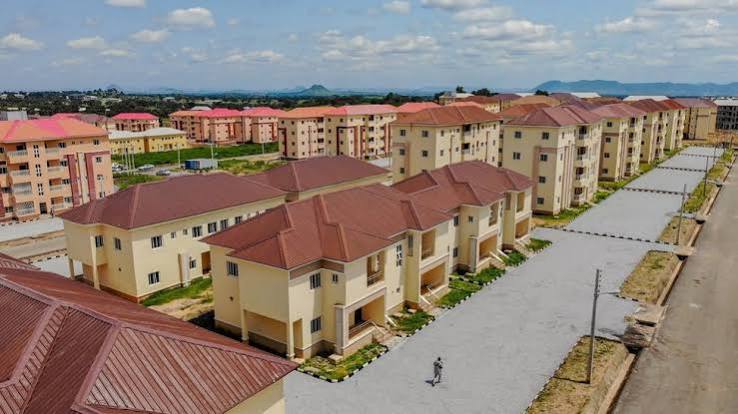
The Speaker of the House of Representatives, Tajudeen Abbas, has identified lack of trust, fraudulent property transactions and multiple ownership claims as major obstacles to the growth of Nigeria’s real estate sector, calling for stronger regulation and a centralised digital property ownership system.
Abbas said Nigeria’s housing challenge was not necessarily a shortage of properties but the absence of a reliable system that guarantees transparency, protects buyers and establishes legitimate ownership of land and buildings.
He made this known on Monday in Abuja while delivering a keynote address at a stakeholder conference on the proposed National Real Estate Regulatory Authority, organised by the House Committee on Housing and Habitat.
Speaking on the theme, “One Vision, One Ecosystem, One National Housing and Real Estate Plan,” the Speaker advocated a centralised and digitised administrative framework that would connect property ownership records with the identities of owners, buyers and sellers.
“Nigeria does not lack property. Nigeria lacks enough trust in property,” Abbas said.
He argued that the absence of reliable ownership records and effective regulatory oversight had exposed Nigerians to property fraud, conflicting ownership claims and prolonged land disputes, thereby discouraging investment in the sector.
The Speaker maintained that effective regulation should not be considered an obstacle to legitimate businesses but a necessary safeguard against fraudulent operators, unfair competition and the exploitation of unsuspecting homebuyers.
He said restoring confidence in property transactions would protect genuine investors, strengthen the real estate market and make the sector more attractive to local and international capital.
Similarly, the Chairman of the House Committee on Housing and Habitat, Abdulmumini Jibrin, said the proposed National Real Estate Regulatory Authority was designed to address longstanding institutional weaknesses, overlapping responsibilities and inadequate consumer protection in the housing sector.
Jibrin observed that individuals could currently advertise properties through brochures, collect money from prospective buyers and disappear without any effective institutional mechanism to verify their credentials or capacity to deliver the projects.
He said the absence of a coordinated regulatory structure had created loopholes that allowed questionable property developers to operate without adequate accountability.
The lawmaker also identified gaps in the responsibilities of government agencies, noting that the Minister of Housing and Urban Development did not exercise direct jurisdiction over all institutions involved in the housing ecosystem.
“There are enormous challenges. We have a wonderful Minister of Housing. But as the Minister of Housing of the Federal Republic of Nigeria, he does not have jurisdiction over all the agencies and institutions that have to do with housing. There is a link; there is a gap. So, there is duplication of functions,” he said.
Jibrin added that the proposed authority would establish clearer responsibilities for property developers and consumers, introduce effective dispute-resolution mechanisms and ensure compliance with professional and operational standards.
He, however, dismissed concerns that the proposed legislation would undermine the constitutional powers of state governments or take over the statutory responsibilities of existing professional bodies and government institutions.
“The bill to create the National Housing Regulatory Authority is not going to take over the powers of any state government. We are not going to compete. We are only going to cooperate. And for professional bodies, nobody is taking away your responsibility. It will be protected,” he said.
He explained that the proposed authority would strengthen existing institutions and ensure that government agencies performed their statutory responsibilities more effectively.
However, the Managing Director and Chief Executive Officer of the Ministry of Finance Incorporated, Dr Armstrong Takang, urged lawmakers to carefully examine the proposed regulatory framework to prevent conflicts with existing laws, particularly the Land Use Act.
Takang also warned against excessive regulation, saying the creation of another government agency should not unnecessarily increase recurrent expenditure or discourage private sector investment.
He urged stakeholders to ensure that the proposed authority complemented existing institutions rather than duplicated their responsibilities.
“To what extent are we going to address the regulation of practice in this sector? To what extent are we also going to ensure that the sector is not overregulated? And how do we create this new agency and fit it into the existing structure of government in a way that we do not expand the recurrent expenditure framework of government?” he queried.
Takang, however, assured stakeholders that the Presidency and Federal Government were prepared to give the proposed legislation a fair consideration, particularly in addressing existing legal and institutional challenges within the sector.
In his remarks, the Minister of Housing and Urban Development, Muttaqha Darma, disclosed that the country’s housing deficit had been estimated at more than 50 million units following a stakeholder engagement organised by the ministry in July.
He said the challenge was compounded by limited access to mortgage financing, which had prevented many Nigerians from acquiring decent and affordable homes.
According to him, Nigeria’s mortgage penetration remained below 10 per cent, compared with 38 per cent in Malaysia and 40 per cent in South Korea.
Darma said the low level of mortgage access remained a major obstacle despite the existence of institutions such as the Federal Mortgage Bank of Nigeria.
He described the built environment and real estate sector as the third-largest contributor to the Nigerian economy, stressing that stronger institutional arrangements were necessary to maximise its economic potential.
The minister expressed support for the proposed regulatory authority but recommended that it be domiciled within the Ministry of Housing and Urban Development to ensure proper coordination with existing government policies.
He cited Singapore, Dubai, Malaysia, the United Kingdom and Rwanda as examples of jurisdictions where similar regulatory institutions operate within ministries responsible for housing and the built environment.
Darma also called for coordination between the proposed authority, the National Housing Finance Authority and the Federal Government’s mortgage policy currently awaiting presidential consideration.
The proposed National Real Estate Regulatory Authority is expected to provide a coordinated framework for property transactions, strengthen consumer protection, improve professional standards and address institutional weaknesses that have continued to undermine confidence in Nigeria’s housing market.