






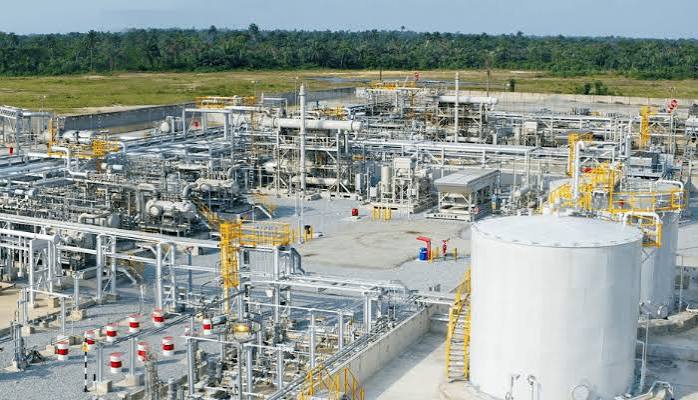
Nigeria and France are seeking to deepen investment and cooperation in the energy sector, with industry stakeholders highlighting the need for technology transfer, local content development and improved infrastructure to unlock the country’s oil and gas potential.
The call was made at an energy roundtable organised as part of the 2026 French Week by the Franco-Nigerian Chamber of Commerce and Industry.
According to a statement issued on Tuesday, participants from the energy industry, government and diplomatic community identified gas development, energy transition, decarbonisation and regulatory stability as priority areas for strengthening economic cooperation between both countries.
Speaking at the event, the Managing Director and Chief Executive Officer of TotalEnergies Nigeria, Matthieu Bouyer, said the energy sector presented significant opportunities to strengthen the longstanding relationship between Nigeria and France.
Bouyer said the company, which has operated in Nigeria for 70 years, remained committed to developing local capacity, supporting Nigerian contractors and building sustainable partnerships.
“We see Nigeria not just as a market, but as a long-term investment destination where we continue to develop people, work with local contractors and build partnerships,” he said.
He disclosed that more than 100 French companies operate in Nigeria across various sectors, including energy, infrastructure, logistics, technology, agriculture and consumer goods, providing thousands of jobs.
He added that bilateral trade between Nigeria and France reached approximately $4.7bn in 2025, creating opportunities for increased commercial engagement.
Bouyer identified energy transition and decarbonisation, gas infrastructure and domestic utilisation, as well as technology transfer and local content development as key areas requiring stronger collaboration.
He stressed that Nigeria’s energy transition must reflect its development priorities, particularly the need to expand energy supply while gradually reducing carbon emissions.
According to him, improved gas recovery, methane reduction and energy efficiency could deliver both environmental and economic benefits.
On gas development, he described Nigeria’s natural gas resources as a major opportunity for electricity generation, manufacturing, exports and industrial expansion.
He, however, emphasised that adequate infrastructure and a stable investment environment were necessary to attract the capital required to develop the sector.
Also speaking, the Managing Director of Nigeria LNG Limited, Adeleye Falade, described natural gas as a critical driver of Nigeria’s industrialisation and economic diversification.
Falade disclosed that Nigeria had approximately 215 trillion cubic feet of proven gas reserves, while estimates of its wider gas resources stood at about 600 trillion cubic feet.
He argued that gas should be viewed not merely as a transitional fuel but as a foundation for industrial development, clean cooking, export earnings and economic growth.
“Nigeria’s energy transition must be just, realistic and investable,” he said, noting that Africa’s energy development challenges differed from those of Europe, particularly in access to reliable electricity.
Falade cited NLNG’s Train 7 expansion project as an example of how international partnerships could support domestic industrial development and increase the country’s gas production capacity.
He disclosed that engineering work on the project was 99.5 per cent complete, procurement had reached 99.8 per cent, while construction was approximately 94 per cent complete.
The project, expected to commence operations towards the end of 2027, will increase NLNG’s production capacity from 22 million tonnes per annum to approximately 30 million tonnes per annum.
According to Falade, the expansion has also created opportunities for Nigerian contractors and manufacturers, with local content accounting for about 95 per cent of the project.
He said approximately 16,000 people, largely young Nigerians, were engaged during construction, while activities across the wider project supported an estimated 40,000 jobs.
The NLNG chief executive added that Nigerian companies had manufactured several components, including pressure vessels, cables and valves, demonstrating the growing capacity of local manufacturers to participate in major energy projects.
He noted that the technical skills and facilities developed through the Train 7 project would support future industrial developments and improve the competitiveness of Nigerian engineering companies.
On the company’s economic contributions, Falade disclosed that NLNG had generated approximately $149.6bn in revenue since commencing operations, paid $47.9bn in dividends and remitted about $10.5bn in taxes.
He said further expansion of the company’s production capacity would increase government earnings through taxes, dividends and other payments.




