



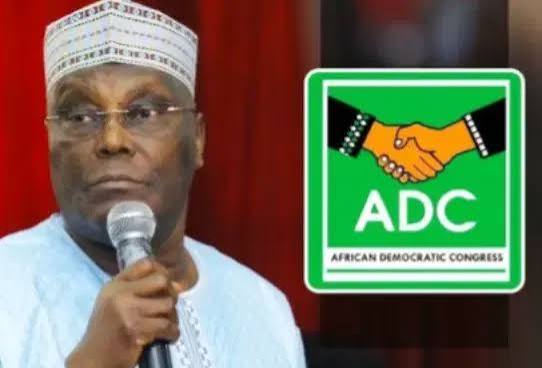
The African Democratic Congress has described Uber’s exit from Nigeria as further evidence that President Bola Tinubu’s economic policies are creating a hostile environment for businesses in the country.
The opposition party said the decision by the global ride-hailing company to leave Nigeria, alongside the shutdown or scaling down of operations by several multinational firms, amounted to a vote of no confidence in the administration’s economic policies.
The ADC National Publicity Secretary, Bolaji Abdullahi, said this in a statement issued on Thursday.
Abdullahi said the growing number of companies leaving Nigeria or reducing their operations exposed what he described as a widening gap between the Federal Government’s claims of economic progress and the challenges confronting businesses and Nigerians.
The party said it was particularly concerned that the government was celebrating a marginal improvement in economic growth while businesses were shutting down, jobs were being lost and Nigerians were facing increasing hardship.
“Certainly, a 0.2 per cent growth does not justify the extreme hardship that Nigerians are suffering,” the ADC said.
The party challenged Tinubu and the ruling All Progressives Congress to explain the reported economic growth to Nigerians who, according to the party, have been pushed deeper into poverty since the administration assumed office.
“When the President and his party say things are getting better, we expect them to tell us what has improved in the lives of Nigerians. They should tell us how much food their ‘GDP growth’ has put on the tables. They should tell us which bill it has paid,” the party said.
It added, “If 0.2 per cent is a mark of success in their books, President Tinubu and APC should tell us what they consider as failure.”
The ADC linked Uber’s exit after 12 years of operations in Nigeria to what it described as an increasingly difficult business environment, citing rising energy and transportation costs.
The opposition party attributed the increase in fuel costs to the removal of the petrol subsidy and naira devaluation, which it said had significantly raised the cost of doing business.
“This is precisely why the ADC Presidential Candidate, Alhaji Atiku Abubakar, has proposed the restoration of a targeted fuel subsidy to bring down the cost of fuel, transportation and production,” the party said.
The ADC also cited an earlier report by the Manufacturers Association of Nigeria, which it said indicated that 767 manufacturing companies, including 20 global brands, had shut down or ceased operations in the country, while hundreds more were distressed.
It listed Microsoft, Jumia, Bolt Food, Pick n Pay, Shoprite, GlaxoSmithKline, Sanofi-Aventis, Bayer AG, Procter & Gamble, Unilever and PZ Cussons among companies that had either shut down, exited or scaled down their operations in Nigeria.
The party said the development raised questions about the sustainability of the Federal Government’s economic reforms.
“Therefore, when the President announces that Nigeria has turned the corner, we wonder which corner he is talking about,” the ADC said.
The opposition party questioned why companies would continue to leave the country if the economy was improving and investors had confidence in the government’s policies.
“If indeed the economy is improving, or the slightest hope exists in the minds of those who run these businesses that this APC government can improve the economy, why are they closing shop and moving elsewhere?” it asked.
The ADC cited GlaxoSmithKline as an example, saying the pharmaceutical company ended its manufacturing operations in Nigeria after five decades.
The party maintained that the continued departure of major businesses should prompt the Federal Government to reassess its economic policies and address the rising cost of production and doing business in Nigeria.