




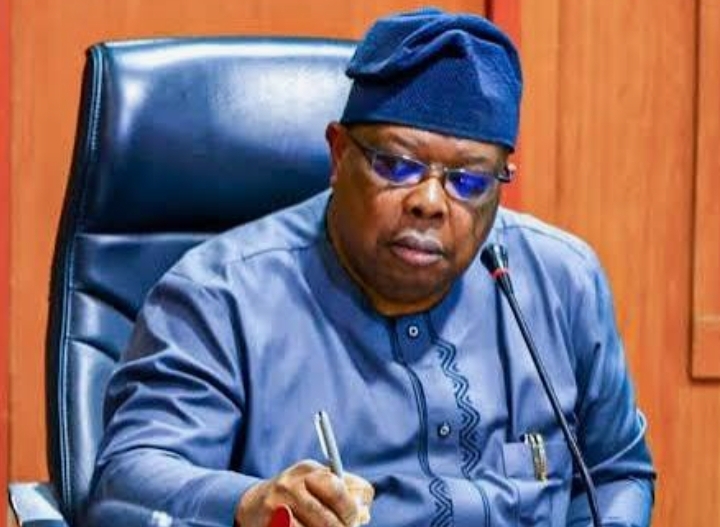
The Minister of Power, Joseph Tegbe, has ruled out an increase in electricity tariffs in 2027, declaring that the Federal Government is prioritising improved electricity supply and access over imposing additional financial burdens on consumers.
Tegbe also identified poor governance, inadequate coordination, commercial challenges and institutional failures as major obstacles to the country’s electricity development, estimating that 80 per cent of the problems confronting the sector were human-related, while technical deficiencies accounted for the remaining 20 per cent.
The minister made the disclosures during an exclusive interview on ARISE News on Monday, November 23, 2026, where he addressed the persistent electricity crisis, mounting debts in the power sector, gas supply challenges, infrastructure deficiencies and the government’s reform plans.
Responding to questions about whether the Federal Government was considering increasing electricity tariffs to address the financial difficulties confronting the sector, Tegbe categorically dismissed the possibility of another increase in 2027.
“Let me make it categorically clear to Nigerians. And I’ll say it again. There’s no plan to increase tariffs,” he said.
He explained that his immediate priority was to ensure that Nigerians had access to electricity, adding that the government was exploring alternative arrangements to address the financial challenges facing the industry.
According to him, President Bola Tinubu had proposed exploring a concessionary gas pricing arrangement for electricity generation companies to reduce the cost of power generation without forcing gas suppliers out of business.
“The most important thing for me is, how do I get electricity to Nigeria? And I’ll tell you, Mr President is saying, we own the gas. People need to give GenCos gas at a particular concessionary rate that is not going to make gas suppliers go out of business. Let’s look at the model,” the minister stated.
Tegbe further disclosed that the government was reviewing the assumptions underpinning the electricity tariff model, noting that some could be adjusted to address the sector’s financial difficulties without increasing what consumers pay.
“We’re looking at assumptions that have been built into the tariff model. There’s a possibility that some of those assumptions may need to be revised. But rule out tariff increase,” he said.
He maintained that his administration was prepared to reconsider existing policies and arrangements across the electricity value chain, provided such changes would improve electricity access.
“I’m re-evaluating many things. And I have no boundary. The only boundary and guiding principle I have is to re-evaluate everything and rejig whatever you can, as long as you can give Nigeria electricity access.
“I will tell you, tariff increase is not on the plates. Tell Nigerians for me,” he added.
FG Has Paid ₦1.23tn Of ₦3.3tn Electricity Debt
Addressing the outstanding financial obligations in the electricity sector, the minister disclosed that the Federal Government had paid ₦1.23tn out of the negotiated ₦3.3tn debt owed to power generation companies.
He said the government was on course to settle the outstanding balance in 2027, adding that alternative payment arrangements were being considered to address the obligations.
According to him, the government was examining options that could include offsetting some of the debts against royalties and corporate income tax.
He also disclosed that discussions were ongoing with the Nigerian National Petroleum Company Limited on measures to reduce gas costs for electricity generation.
The minister explained that resolving the financial challenges confronting the sector was critical to improving the operations of generation companies and strengthening electricity supply across the country.
80% Of Power Sector Problems Human-Related – Tegbe
Beyond the financial challenges, Tegbe argued that Nigeria’s electricity crisis was not primarily a technical problem, insisting that institutional weaknesses and poor management had contributed significantly to the sector’s persistent difficulties.
He recalled making the same observation during his Senate screening, maintaining that his assessment after assuming office had reinforced his position.
“I said the problem in the power sector is 20 per cent technical, 80 per cent human,” he said.
He identified poor teamwork, lack of coordination among operators, commercial difficulties, liquidity challenges and governance failures as some of the factors undermining the sector.
The minister noted that some of the challenges were deeply rooted in the electricity industry, with certain infrastructure and institutional problems dating back several decades.
As an illustration, he cited electricity transmission towers still bearing the logo of the defunct Electricity Corporation of Nigeria, which existed before the National Electric Power Authority.
He also criticised previous investment decisions, alleging that some projects were executed without adequate consideration of the infrastructure required to make them functional.
According to him, transformers had been installed in some communities without the necessary transmission lines to supply electricity.
“From a technical point of view, I will tell you the biggest issue: it is that we’ve been throwing money at wrong things,” Tegbe said.
He argued that some investment decisions under previous administrations were influenced by political considerations rather than proper technical assessments and electricity needs.
“We have not worked prioritising things in the past. Some of the decisions that have been made by previous governments have been driven by political reasons,” he added.
FG Reviews Electricity Projects Nationwide
To address the problem of misplaced investments, Tegbe disclosed that the Ministry of Power was reviewing ongoing electricity projects across the country to determine their relevance, connectivity and potential impact on electricity supply.
He said a team had been assigned to examine the projects and identify those requiring priority attention.
The exercise, according to him, would help the government channel available resources into projects capable of delivering tangible improvements rather than continuing to spend money on infrastructure that cannot independently improve electricity access.
He stressed that the government was prepared to reconsider existing arrangements and redirect investments towards critical areas of the electricity value chain.
‘Electricity Is Not Just Commercial Transaction’
The minister acknowledged the frustration Nigerians experience whenever electricity supply becomes unreliable, particularly during periods of intense heat.
He said consumers had legitimate reasons to complain when they were unable to enjoy electricity in their homes despite the importance of power to their daily activities.
“Let me tell you, as the Minister of Power today, I understand the pains of Nigeria. Nigerians, I understand your pain. Look, if you sit at home and you don’t have light in the hot sun and everywhere is heated up, you have the right to complain,” he said.
Tegbe maintained that electricity should not be treated exclusively as a commercial commodity because of its importance to social and economic development.
“For me, electricity is not just a commercial transaction. There’s a social responsibility to it,” he stated.
He added that President Tinubu shared concerns over the country’s electricity challenges and that the government was working towards addressing the situation.
“We discuss this and we’re doing the best we can. However, we’ll do whatever it takes to give an average Nigerian access to electricity,” he said.
Tegbe Explains ‘Freezers Are Meant To Freeze’ Comment
The minister also used the interview to explain his controversial earlier remark that freezers were meant to freeze, which attracted criticism from Nigerians experiencing persistent power outages.
He said the comment was not intended to ridicule consumers struggling with electricity supply but was made in response to positive feedback he had received from some electricity users.
Tegbe recalled that he attended the commissioning of a 1.6-megawatt mini-grid facility at the University of Abuja, which he said had provided students with free, round-the-clock electricity over the preceding year.
He explained that some Nigerians subsequently sent him videos and messages expressing satisfaction with improved electricity supply in their communities.
According to him, his freezer remark was a light-hearted response to those positive reports and was not meant to suggest that electricity challenges had been resolved nationwide.
“I had no disregard, please. I had no disregard for the people that still have challenges with power, and that wasn’t my intention,” he said.
He maintained that the government recognised the difficulties facing electricity consumers and would continue working to improve supply.
FG Targets Major Improvement In Three To Five Years
On the timeline for addressing the electricity crisis, Tegbe acknowledged that the infrastructure deficiencies confronting the sector were more extensive than initially anticipated.
He nevertheless expressed confidence that ongoing and planned interventions would produce significant improvements in electricity supply within the next three to five years.
The minister’s remarks came amid the government’s efforts to rehabilitate ageing electricity infrastructure, strengthen transmission capacity and address financial and operational challenges affecting the industry.
On November 9, 2026, Tegbe had also announced that the Federal Government would commence the replacement of infrastructure across the national grid within the next one to two months.
The proposed intervention is expected to address some of the longstanding infrastructure weaknesses affecting electricity transmission and distribution.
He reiterated that the administration was committed to reviewing existing policies, improving coordination among industry operators and ensuring that investments translated into better electricity access for Nigerians.