




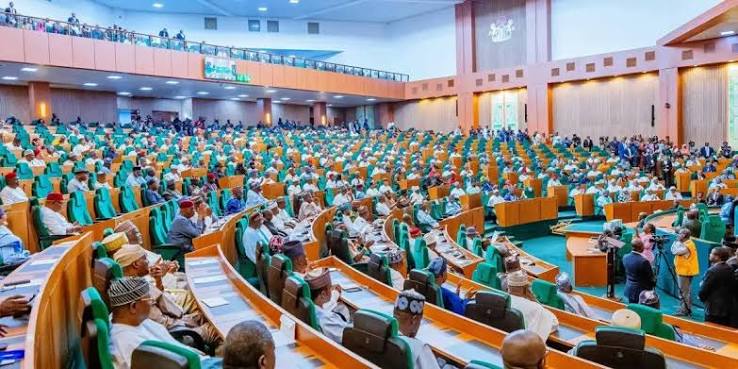
The National Assembly has said it will constitutionally guarantee funding for the proposed state police through a first-line charge while introducing legal safeguards to prevent abuse by governors and other vested interests.
The assurance was given by Senate Leader and Vice Chairman of the Senate Committee on the Review of the 1999 Constitution, Senator Opeyemi Bamidele, and Speaker of the House of Representatives, Tajudeen Abbas, at the National Dialogue on State Policing organised by the House Committee on Constitution Review in Abuja.
Bamidele said concerns by Nigerians over the creation of state police were valid, especially in view of the abuse of regional police under the 1960 and 1963 Constitutions, but assured that the National Assembly was putting in place constitutional safeguards to ensure professionalism, accountability and institutional independence.
According to him, lawmakers are developing a multi-layered framework that will guarantee personnel discipline, institutional independence and fiscal autonomy for state police services.
“We are determined to ensure that funding for state police services becomes a first-line charge provided for in the Constitution, just as it is for the judiciary,” Bamidele said.
He explained that the Commissioner of Police and the State Police Service Commission must have constitutionally guaranteed funding so they would not be subject to “the whims and caprices” of state governors.
“If a state police service is not responding well to the directives of a governor, he may choose not to fund it. We must prevent such a situation,” he said, adding that the National Assembly was considering a constitutional provision that would dedicate a specified percentage of each state’s annual budget to policing.
Bamidele also warned that political office holders were not the only potential threat to the independence of state police.
“Business class can also abuse it. Some other organisations, even criminals or cabals, can abuse state police service because it is a question of ‘he who pays the piper dictates the tune’,” he said.
He stressed that creating state police without guaranteed funding and financial autonomy would undermine its effectiveness, describing such an arrangement as “a highway to nowhere.”
The Senate Leader further disclosed that the constitutional amendment seeks to move policing from the Exclusive Legislative List to the Concurrent Legislative List, enabling both the Federal Government and state governments to operate police services.
He assured Nigerians that all genuine concerns raised during consultations would be addressed before the constitutional amendment is concluded.
Speaking at the dialogue, Speaker of the House of Representatives, Tajudeen Abbas, said the establishment of state police must be backed by adequate funding, strong oversight and a phased implementation plan to ensure success.
Abbas said lawmakers must address critical issues such as sustainable funding, inter-agency intelligence sharing, certification of state police services and the role of vigilante groups before passing the legislation.
“Third, we must settle the question of money from the very beginning, whether through a dedicated policing fund, shared services or federal support tied firmly to standards,” the Speaker said.
He also advocated a phased implementation of state police, beginning with states that have demonstrated institutional capacity, while ensuring all state police formations operate under nationally prescribed standards to maintain professionalism and accountability.
The Speaker commended President Bola Tinubu for transmitting the Executive Bill on state police to the National Assembly, describing it as the first concrete presidential effort in nearly three decades to establish state policing in Nigeria.