




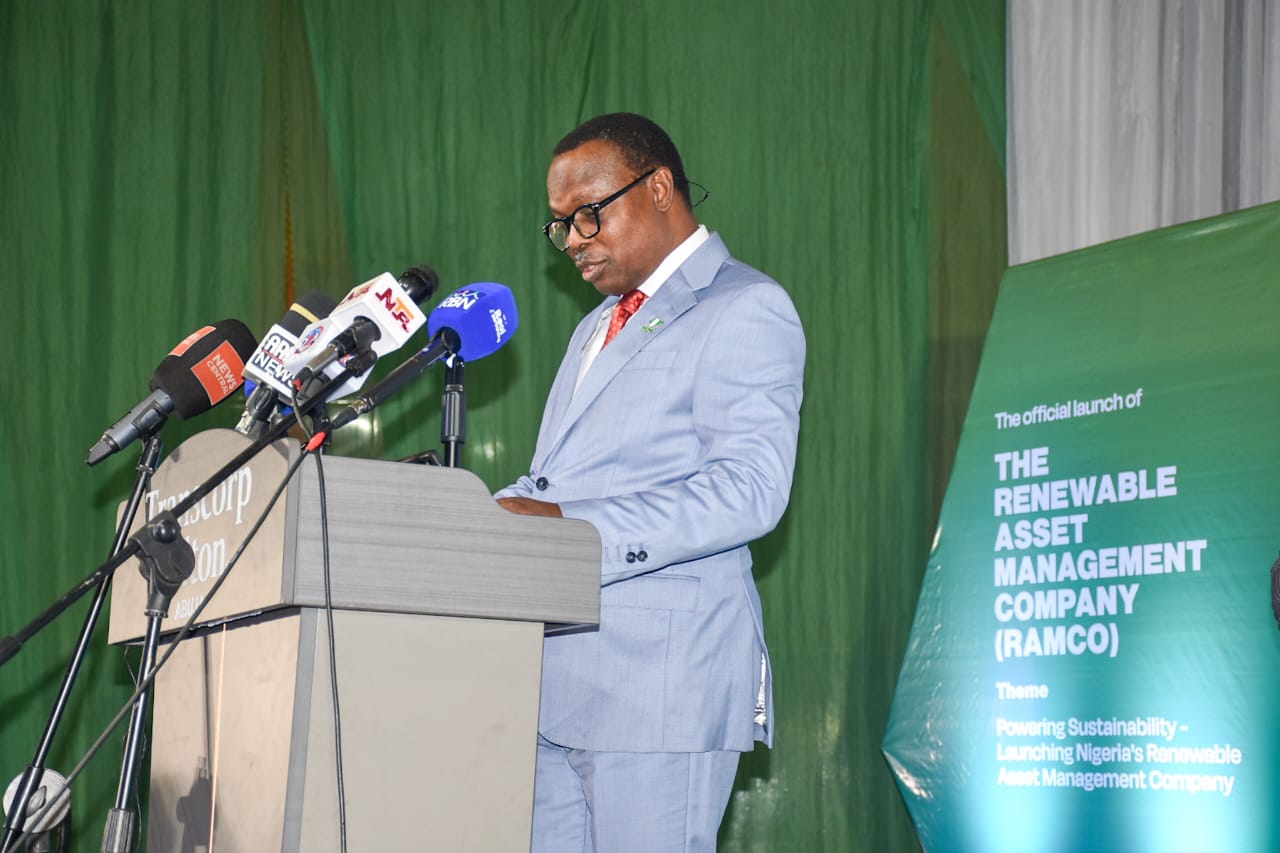
The Federal Government has reiterated its commitment to improving electricity supply in Nigeria’s health facilities, with the Minister of State for Health and Social Welfare, Dr Iziaq Adekunle Salako, describing reliable and sustainable power as a critical factor in improving healthcare delivery.
Salako stated this on Wednesday in Abuja at the official launch of the Renewable Asset Management Company (RAMCO) of the Rural Electrification Agency (REA).
The event, held at the Transcorp Hilton, was themed, “Powering Sustainable Growth: Launching Nigeria’s Renewable Asset Management Company.”
The minister said electricity was more than an infrastructure requirement for hospitals and other health facilities, describing it as an essential component of clinical care.
“Electricity in healthcare facilities is not merely an infrastructure requirement; it is a critical clinical input,” Salako said.
He explained that reliable electricity was necessary for the preservation of vaccines, operation of oxygen concentrators, surgical theatres and neonatal incubators, warning that power failure could affect the quality and speed of medical care and, in critical situations, lead to loss of lives.
60–70% of Health Facilities Face Power Challenges
The minister expressed concern that energy poverty remained a major challenge within Nigeria’s healthcare system despite interventions by the Federal Government and development partners.
According to him, between 60 and 70 per cent of Nigeria’s primary and tertiary healthcare facilities experience frequent power outages or have no access to electricity.
He added that about 40 per cent of functional Primary Healthcare Centres across the country have no electricity, while many of the facilities connected to power receive only between six and 10 hours of supply daily.
Salako said the situation was particularly challenging for teaching hospitals, which require between three and eight megawatts of electricity for optimal operations.
He said many of the hospitals receive only about five hours of electricity from the national grid daily and are forced to devote between 40 and 50 per cent of their operating expenditure to energy, largely through diesel-powered generators.
FG Targets 30% of Health Facilities for Steady Power
The minister said President Bola Tinubu approved the establishment of the Nigeria Power-for-Health Initiative following the first National Stakeholders’ Dialogue on Power in the Health Sector in September 2025.
He said the dialogue produced a Compact for the Sustainable Electrification of Public and Private Health Facilities, involving the Federal Ministries of Health and Power, state governments, heads of health institutions, the private sector, development partners and civil society organisations.
The Compact, he said, set a target of providing steady electricity to at least 30 per cent of Nigeria’s health facilities by the end of 2027.
Salako said the implementation framework also included relevant Ministries, Departments and Agencies, including the Rural Electrification Agency.
He noted that the REA had already supported the electrification of several health facilities through various government programmes.
Under the Nigeria Electrification Project, he said 100 health facilities had received 50-kilowatt containerised solar hybrid systems, while a second phase of the intervention is expected to target another 400 Primary Healthcare Centres.
He added that tertiary health institutions, including teaching hospitals in Maiduguri and Calabar, had also benefited from renewable-energy interventions under the Energising Education Programme.
Minister Calls for RAMCO, Power-for-Health Partnership
Salako, however, said the challenge was not simply to install solar panels and batteries but to ensure that the infrastructure remained functional over the long term.
He said evidence from solar systems installed in Primary Healthcare Centres showed that more than 30 per cent became non-functional within three years of installation.
According to him, the failures were often caused by inadequate preventive maintenance, lack of spare parts, absence of dedicated maintenance budgets and uncertainty over responsibility for the assets after project completion.
The minister said the establishment of RAMCO could help address these challenges through a professional asset-management system.
“The objective is not simply to install solar panels or batteries. It is to build resilient health infrastructure capable of delivering reliable power over the long term,” he said.
He said RAMCO’s proposed model of “build, operate, optimise, aggregate, refinance and reinvest” could transform renewable-energy projects from short-term interventions into professionally managed national infrastructure assets.
Salako proposed that health facilities should be recognised as a distinct asset class within RAMCO’s portfolio, beginning with teaching hospitals and healthcare institutions already powered through existing Federal Government renewable-energy programmes.
He also called for RAMCO’s asset-management system to be integrated with Facility Energy Management Teams being established in hospitals.
According to him, this would combine professional management with technical ownership at the facility level.
The minister further advocated the integration of RAMCO’s asset register with health-facility energy audits to improve data collection and enable both the energy and health sectors to plan investments based on reliable evidence.
He also proposed that part of the capital recycled by RAMCO should be directed towards electrifying Primary Healthcare Centres, particularly facilities in communities where commercial investment may be less attractive.
Ministry Pledges Support
Salako said the Federal Ministry of Health and Social Welfare would support RAMCO’s involvement in the Nigeria Power-for-Health Initiative.
“For our part, the Federal Ministry of Health and Social Welfare commits to offering RAMCO a seat within the Inter-Agency Technical Committee of the Power-for-Health Initiative,” he said.
The minister said the ministry would also work towards establishing electricity as a dedicated budget line across all levels of healthcare.
Other commitments, he said, include completing and regularly updating health-facility energy audits, enforcing certification and installation standards, including NEMSA certification, and coordinating interventions by development partners and private-sector investors.
Salako said a credible asset-management framework would make healthcare electrification more attractive to investors by ensuring that renewable-energy facilities are professionally managed, maintenance is predictable and performance data remain transparent.
He stressed that achieving the Federal Government’s target of steady electricity supply for at least one-third of Nigeria’s health facilities by 2027 would require more than the procurement and installation of equipment.
“We will reach it by building assets that last, and by managing them as the national infrastructure they are,” the minister said.
He called on RAMCO to support efforts to ensure that renewable-energy infrastructure in hospitals and other healthcare facilities remains sustainable and functional.
The minister congratulated the REA, the Ministry of Finance Incorporated and InfraCorp on the launch of RAMCO and assured them of the continued support of the Federal Ministry of Health and Social Welfare.