



The Federal Government has strengthened its partnership with China to expand cancer care, radiotherapy capacity and oncology expertise in Nigeria as part of efforts to improve cancer prevention, diagnosis and treatment.
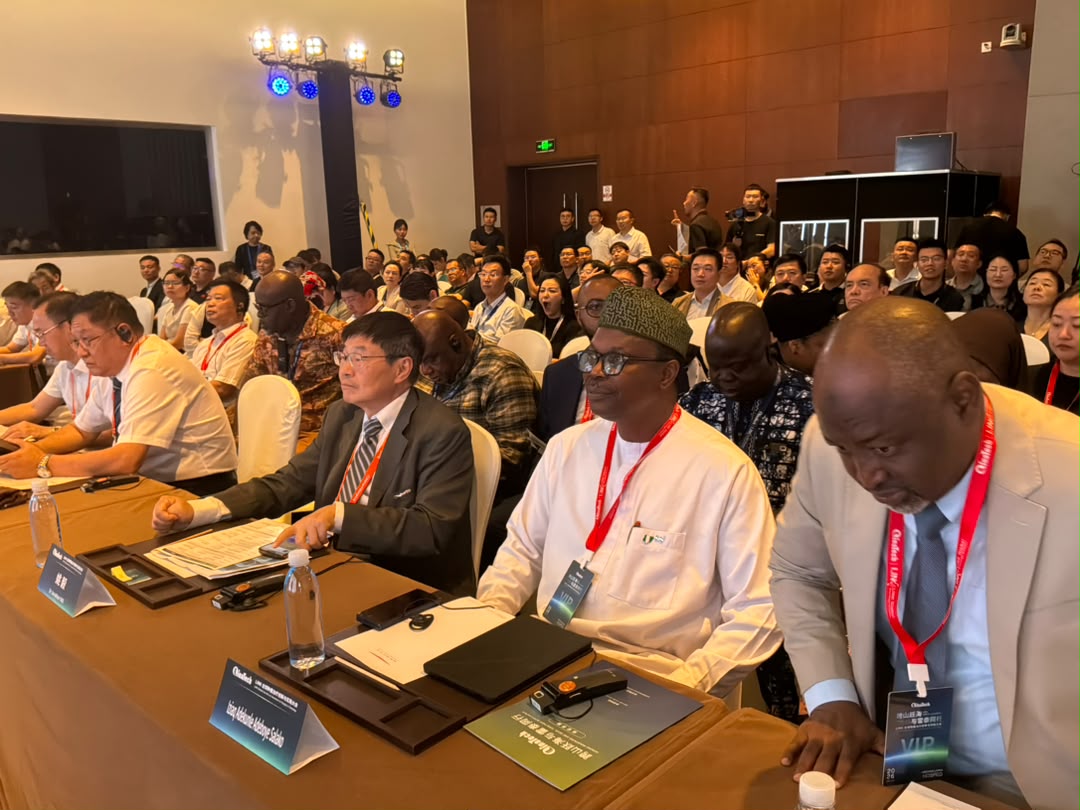
The Minister of State for Health and Social Welfare, Dr Iziaq Adekunle Salako, disclosed this while delivering the opening address at the LINK Global Summit on Innovation and Practice in Oncology at the China National Convention Centre in Beijing, China.
Salako said Nigeria’s participation in the summit demonstrated the government’s determination to move beyond observing advances in cancer care to actively shaping innovation and bringing relevant technologies and expertise into the country.
“Nigeria will not just observe oncology innovation, but help shape and bring it home,” the minister said.
He highlighted the inauguration of the Radiotherapy Working Group of the China-Africa Hospital Alliance and the LINK Global Oncology Alliance, with Nigeria as a founding African partner.
The minister also disclosed the signing of a strategic cooperation agreement with LinaTech, a Chinese technology company specialising in advanced radiation therapy solutions.
According to him, cancer remains a national priority, with Nigeria recording an estimated 127,763 new cancer cases and 79,542 cancer deaths in 2022. He noted that breast, prostate and cervical cancers accounted for more than 40 per cent of cancer mortality.
Salako said the government, under President Bola Tinubu’s Renewed Hope Agenda, had accelerated interventions in cancer prevention, awareness, early detection, treatment, financing, infrastructure and research since May 2023.
He cited the introduction of the Human Papillomavirus vaccine into routine immunisation in October 2023, which has reached more than 14 million girls aged nine to 14.
The minister described the campaign as the largest single round of HPV vaccination in Africa.
He also highlighted the National Initiative for Cancer Early Detection, Screening and Coordinated Access to Network Care, known as NICE-SCAN, as well as interventions by the Task Force for the Elimination of Cervical Cancer.
According to Salako, the initiatives are designed to bring cancer screening, early detection and referral services closer to Nigerians.
On cancer treatment and financial protection, he identified the National Cancer Access Programme, Catastrophic Health Insurance Scheme, National Cancer Health Fund and Social Determinants of Cancer Care Fund as key measures aimed at improving access to essential medicines and reducing the financial burden on patients and their families.
The minister further disclosed that the National Institute for Cancer Research and Treatment had trained about 140 early-career cancer scientists and supported 24 research grants.
He said six cancer centres of excellence were being developed across the country, with three already completed and commissioned in Katsina, Enugu and Benin.
According to him, the three commissioned centres have been equipped with modern linear accelerators, while work is progressing on the remaining centres.
Salako disclosed that President Tinubu had also approved the procurement and installation of 35 additional linear accelerators between 2026 and 2028 to further expand access to radiotherapy services.
“Earlier this year, Mr President approved the procurement and installation of thirty-five additional linear accelerators for between 2026 and 2028 to further increase access to radiotherapy in the management of solid cancers,” he said.
The minister said the interventions were being implemented under the Nigeria National Cancer Control Plan 2026–2030, which prioritises prevention, decentralised diagnosis and treatment, financial risk protection, oncology workforce development, clinical trials and cancer registries.
He also noted that the recent inauguration of the Blood Cancer Consortium further demonstrated the government’s commitment to establishing a coordinated national cancer-control system.
Salako stressed that Nigeria’s long-term ambition was not merely to acquire cancer equipment but to develop the human and technical capacity needed to install, maintain and eventually manufacture such technologies locally.
He described the emerging partnership with China as critical to achieving the objectives, noting that the cooperation agreement would support radiotherapy technical assistance, joint research and development, academic exchanges and professional capacity building.
“Nigeria seeks key strategic outcomes in the months ahead: a joint work plan with named focal persons and quarterly milestones, so that this memorandum lives beyond these signatures. We want to see the twinning of our cancer centres of excellence, the National Institute for Cancer Research and Treatment, and our tertiary hospitals like the National Hospital, Abuja, with the Chinese cancer hospitals,” the minister said.
He called for the establishment of a designated clinical training base in Nigeria to serve as a West African hub for advanced radiotherapy training.
He also advocated fellowship opportunities in China for Nigerian radiation oncologists, medical physicists, radiotherapy technologists and biomedical engineers.
Looking ahead to 2030, Salako said Nigeria would pursue technology transfer, local assembly and servicing of radiotherapy and imaging equipment, joint clinical trials, cancer registry-linked research, artificial intelligence-assisted treatment planning, adaptive radiotherapy and tele-oncology collaborations.
He added that government incentives for health manufacturing, including zero-duty and zero-VAT measures, provided an enabling environment for investment in local production and technology transfer.
The minister emphasised the importance of developing human capacity alongside infrastructure.
“Machines without people are monuments,” Salako said, stressing that every linear accelerator installed must be backed by trained personnel, maintenance systems and sustainable technical support.
He urged participants at the summit to focus on translating oncology innovation and research into tangible improvements in patient care.
“Innovation in oncology is meaningful only where it reaches the patient. Let this summit be remembered not for what was displayed, but for what was delivered. Nigeria is ready, our plan is costed, our partners are welcome, and the patients are waiting,” he said.
Salako expressed confidence that the summit would strengthen collaboration among governments, clinicians, researchers, industry stakeholders, development partners and patient advocates to accelerate solutions capable of improving cancer outcomes in Nigeria, Africa and beyond.