




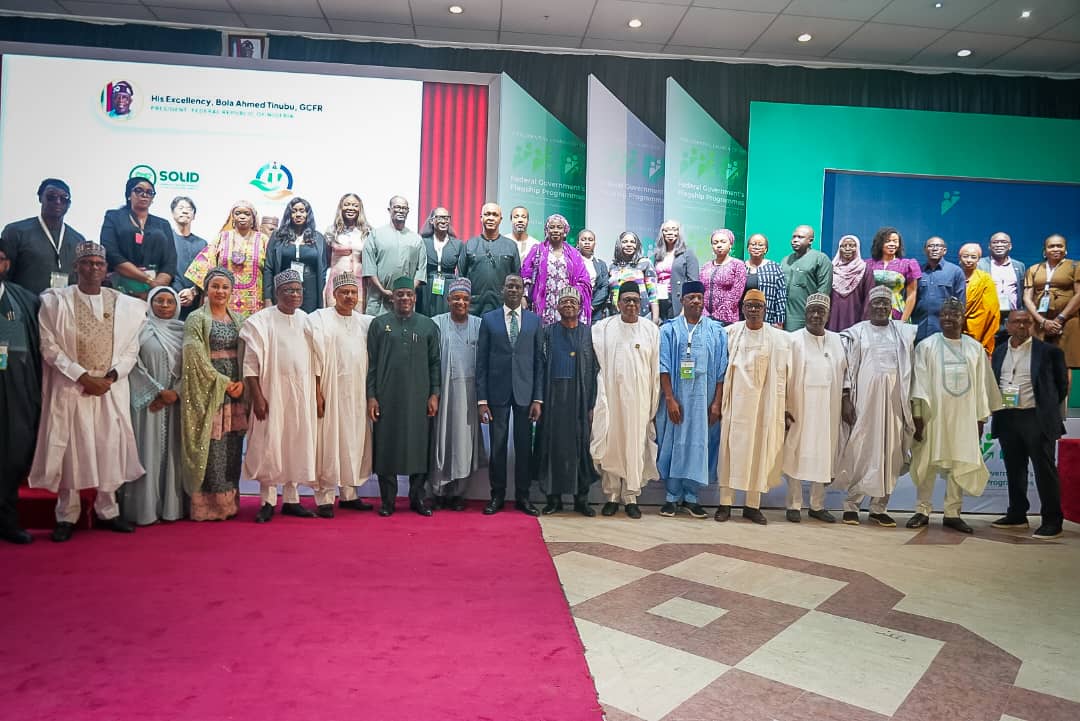
The Federal Government has launched development programmes worth $1.07 billion aimed at strengthening primary healthcare services, improving human capital development, reducing poverty and consolidating the country’s economic recovery.
The programmes, unveiled on Thursday at the State House in Abuja, include the $500 million Human Capital Opportunities for Prosperity and Equity-Governance (HOPE-GOV) Programme and the $570 million Primary Healthcare Provision Strengthening Programme (HOPE-PHC), both key components of the Nigeria Health Sector Renewal Investment Initiative (NHSRII).
Speaking on behalf of President Bola Tinubu, the Minister of Finance and Coordinating Minister of the Economy, Prof. Taiwo Oyedele, said the initiatives were designed to ensure that the benefits of Nigeria’s economic reforms reach ordinary citizens.
He noted that the country’s economy had recorded significant improvements, including 11.2 per cent GDP growth, increased foreign reserves and declining inflation.
“These economic gains are not merely statistical achievements but the foundation for the next phase of national development focused on improving the lives of ordinary Nigerians,” he said.
The Coordinating Minister of Health and Social Welfare, Prof. Muhammad Ali Pate, said the programmes would accelerate the implementation of the administration’s Renewed Hope health agenda by improving governance, expanding access to quality healthcare and strengthening service delivery at the grassroots.
He disclosed that 3,026 primary healthcare centres had been revitalised nationwide, while 231 secondary hospitals received maternal and newborn equipment worth $200,000 per state.
Pate said the reforms were already yielding results, with 78,054 frontline health workers trained and 45.5 million visits recorded in facilities supported by the Basic Healthcare Provision Fund in a single quarter.
“The reforms are increasing service utilisation, with more women choosing to give birth in health facilities, reflecting renewed confidence in the health system.
They are increasing uptake of essential health services, with more families choosing modern family planning and more children receiving life-saving vaccines,” he said.
Also speaking, World Bank Country Director for Nigeria, Mathew Verghis, described the programmes as a major step towards achieving universal health coverage and improving health outcomes.
He said the HOPE-PHC Programme and associated investments reflected a stronger commitment by the Federal Government and development partners to building a more resilient healthcare system and improving the well-being of Nigerians.