




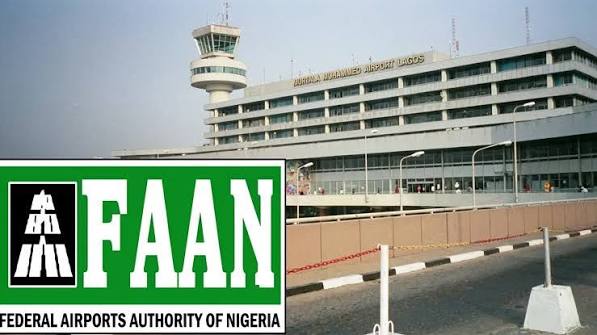
A viral protest by airport cab drivers has drawn attention to growing concerns over the Federal Airports Authority of Nigeria’s (FAAN) planned digital taxi management system, with operators demanding greater stakeholder engagement amid fears over its impact on their livelihoods.
The controversy erupted after a video circulated on social media showing distressed airport cab drivers appealing to President Bola Tinubu over what they believed was a directive requiring them to replace their vehicles with 2020 models.
In the video, one of the drivers, speaking in Yoruba, urged Nigerians to intervene, saying the cost of acquiring newer vehicles, estimated between N18 million and N30 million, was beyond the reach of many operators amid the country’s economic challenges.
“This is what we are facing. Nigerians should help us intervene. They said we should go and buy vehicles from 2020 and above.
With the way Nigeria is now, there are no jobs and people are struggling. Nigerians should pity us and help us intervene,” the driver said.
However, investigations indicate that the dispute extends beyond vehicle specifications and centres largely on the implementation of the Airport Car Hire Rank Management System (ACHRAMS), a digital platform introduced by FAAN to regulate airport taxi operations, improve security and streamline passenger movement.
FAAN has described the initiative as a major step toward modernising airport transportation services, enhancing passenger safety and eliminating touting around airport terminals.
Responding to the controversy, FAAN’s Director of Commercial and Business Development, Mrs Adebola Agunbiade, dismissed claims that the protest was triggered by any directive compelling drivers to acquire 2020 model vehicles.
“The claim that the main cause of the drivers’ actions is not accurate. The footage shows planned resistance by car hire operators who refused to register on the ACHRAMS.
Those drivers were working to prevent the soft and pilot launches of the system at the Murtala Muhammed International Airport. This incident is not related to any policy regarding vehicle model year,” she said.
Agunbiade clarified that FAAN’s minimum vehicle requirement remains 2012 models and above, not 2020 as widely alleged.
“It is incorrect to say that FAAN asked drivers to change their vehicles to a minimum of the 2020 model because of the introduction of ACHRAMS.
One of the conditions for registration on the platform is that drivers must operate vehicles manufactured in 2012 or above,” she added.
According to her, the vehicle policy was introduced in 2024, with compliance deadlines extended several times from January to June and now to October 1, 2026 to accommodate operators facing financial difficulties.
FAAN also denied allegations that the digital platform was designed to reduce the number of airport taxi operators.
“It is important to note that FAAN is not planning to clear only 60 per cent of existing drivers to pave the way for ACHRAMS. The intention is to clear all drivers, provided they comply with the laid-down standards,” Agunbiade stated.
She disclosed that almost all airport taxi operators at the Murtala Muhammed International Airport had already been admitted into the pilot phase of the platform, except two companies whose union allegedly advised members not to participate while pursuing separate digital solutions.
FAAN further revealed that discussions were ongoing with ride-hailing companies such as Uber and Bolt to integrate their operations into the system, noting that any temporary restrictions on airport pickups were purely regulatory and pending the conclusion of agreements.
According to the authority, ACHRAMS will introduce digital tracking, stricter screening of drivers and vehicles, transparent fare administration, designated pickup points and enhanced passenger security.
The platform, being implemented under a 10-year concession arrangement, is also expected to reduce congestion around airport terminals while providing electronic booking and payment options for passengers.
Despite FAAN’s assurances, airport cab operators insist that consultations surrounding the project have not been sufficiently inclusive.
National President of the National Association of Airport Cab Drivers, Mr Adepegba Samuel, said drivers were not opposed to the reform but wanted meaningful engagement before its full implementation.
“When you want people to align with a new initiative, there should be proper briefing and enlightenment. The people introducing it are in the office, but we are the ones operating on the road. They should speak with us so that we can also share our views,” Samuel said.
He argued that airport drivers interact directly with passengers and therefore possess practical insights that could contribute to the success of the reform.
“We are the ones who meet the passengers after they leave the terminal. The public will ask us questions about airport transport operations before asking the government. That is why we are asking for a round-table discussion,” he said.
Samuel also raised concerns about the practical application of the proposed technology, arguing that operational realities at Nigerian airports may require a more flexible system.
“The app they are talking about varies. What works at one terminal may not work at another. We are not fighting FAAN. They are our principals, but they should listen to us and allow discussions on the issues,” he said.
He cited longstanding relationships between drivers and customers as another concern, noting that some passengers have relied on specific drivers for decades because of established trust.
According to him, rigid digital allocation systems could disrupt such arrangements and create operational challenges.
Efforts to obtain comments from FAAN’s spokesperson, Mr Henry Agbebire, on the union’s request for direct engagement were unsuccessful, as calls and text messages were not answered as of the time of filing this report.
However, sources within the authority said FAAN had engaged concessionaires responsible for managing airport taxi operators and therefore had no direct contractual relationship with the drivers’ unions.
“FAAN could not have met with them directly because they operate under different concessionaires. The authority has been engaging the companies responsible for overseeing their operations,” one of the sources said.
The dispute highlights the challenges of balancing technological reforms with stakeholder inclusion as FAAN seeks to modernise airport transportation services while operators push for greater consultation and practical implementation measures.