




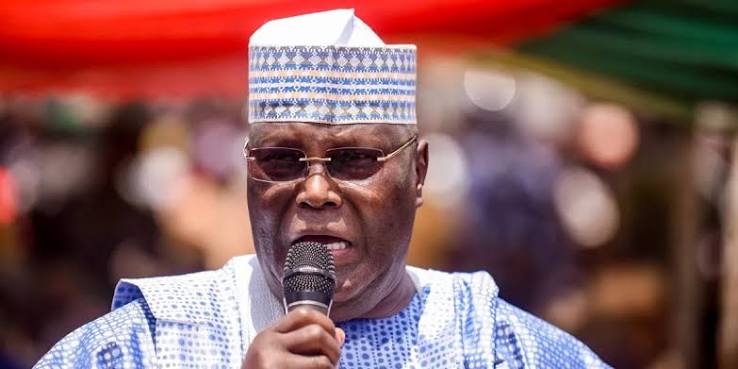
A media adviser to former Vice President Atiku Abubakar, Paul Ibe, has defended his principal’s decision to reconsider his 2023 position on petrol subsidy removal, arguing that responsible leadership requires the courage to review policies when their implementation worsens the living conditions of citizens.
Ibe, in a statement posted on his X account, said Atiku should not be criticised for being willing to rethink a policy position he held during the 2023 presidential campaign, stressing that policy decisions should be assessed by their outcomes and impact on ordinary Nigerians.
He acknowledged that Atiku supported the removal of petrol subsidy during the 2023 campaign but argued that changing that position after observing the consequences of the reform should not be regarded as hypocrisy.
According to him, the central issue should be whether the savings from subsidy removal have translated into improved transportation, healthcare, education, employment and social protection for Nigerians.
Ibe cited World Bank assessments which, he said, showed that subsidy removal and related economic reforms had increased pressure on households, contributing to higher petrol prices and inflation.
He further pointed to the World Bank’s estimate that about seven million additional Nigerians fell into poverty in 2025, taking the proportion of Nigerians living below the national poverty line to 63 per cent. He also noted that poor households were reported to spend as much as 70 per cent of their income on food.
The former vice president’s aide argued that the worsening economic conditions made it unreasonable to insist that Atiku must permanently support a policy simply because he backed it in 2023.
“Public policy does not work that way. Governments evaluate outcomes. Economists revise assumptions. Central banks change course. Presidents should be capable of doing the same,” Ibe said.
He maintained that there was a distinction between recognising the problems associated with the former subsidy regime and endorsing the manner in which its removal was implemented by the present administration.
Ibe also argued that even institutions that supported subsidy removal had stressed the need for adequate compensation and stronger social protection measures to cushion the effect of higher petrol prices on vulnerable households.
He said the consequences of the reform were being felt by Nigerians through rising transportation costs, food prices, rent, school fees and declining purchasing power, adding that economic policies should not treat citizens as expendable variables.
Defending Atiku’s proposed economic recovery strategy, Ibe said the Atiku Economic Recovery Plan would seek to reduce domestic refining costs and, consequently, lower petrol and diesel prices.
He argued that cheaper fuel would reduce transportation and logistics costs, lower the cost of moving agricultural produce to markets and reduce production and distribution expenses for manufacturers.
According to him, the reduction in operating costs would give businesses greater capacity to invest, expand and create jobs, ultimately stimulating economic activity.
Ibe said Atiku’s position was therefore based on a proposed restructuring of the policy rather than a return to the previous subsidy regime, arguing that “policies are made for people. People are not made to suffer indefinitely for policies.”
He maintained that the ability to review a policy after assessing its consequences should be seen as a demonstration of leadership rather than inconsistency, insisting that economic reforms must ultimately be measured by their ability to improve the welfare of Nigerians.