






The National Human Rights Commission (NHRC) has disclosed that complaints relating to the protection of internally displaced persons accounted for 184,624 of the 384,196 human rights complaints recorded across Nigeria in October 2026.
The figure represents the largest component of the 217,243 complaints categorised under freedom from discrimination, highlighting the scale of protection challenges confronting displaced populations across the country.
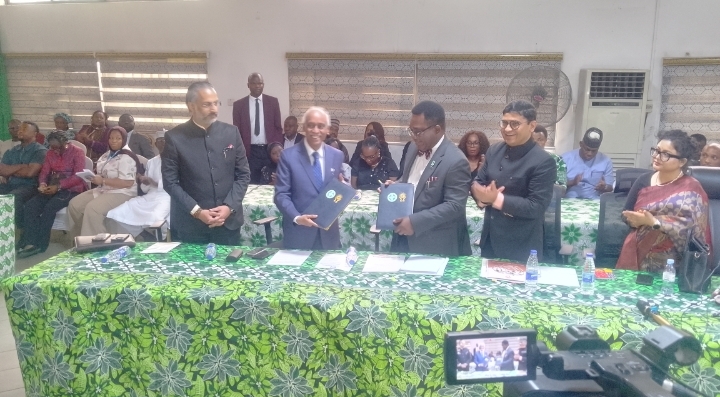
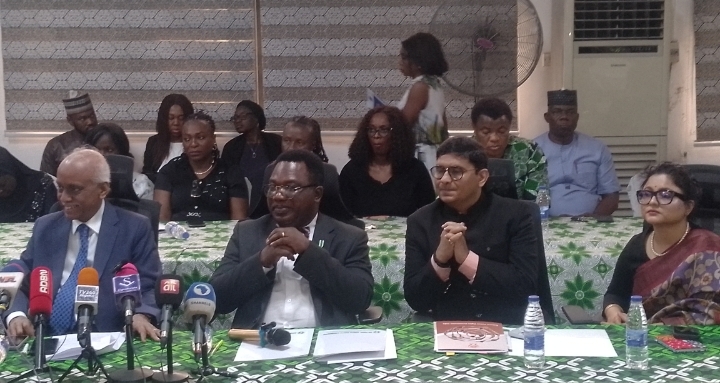
The Executive Secretary of the Commission, Dr Tony Ojukwu, disclosed this on Tuesday in Abuja at the official signing of MoU between the Commission and National Human Rights Commission of India to establish a framework for sustained bilateral cooperation in the promotion and protection of human rights.
The event featured presentation of the October 2026 Human Rights Situation Dashboard of Nigeria.
Ojukwu said the Commission recorded a 14 per cent increase in complaints during the month, representing more than 45,000 additional cases compared with September.
He stressed that the figures reflected the continuing difficulties faced by individuals and communities, particularly vulnerable populations requiring protection and access to basic rights.
“This highlights the scale of protection needs among displaced populations and the importance of ensuring that displacement does not deprive individuals and families of their dignity, security and access to basic rights,” he said.
The NHRC boss also raised concerns over insecurity across the country, identifying reports of mass killings, armed attacks and abductions in Taraba, Borno, Zamfara, Niger and Plateau states.
He said the Commission’s Human Rights Observatory documented attacks on farming communities, travellers, students, traditional leaders and security personnel, warning that the incidents had consequences beyond security concerns.
According to him, the attacks undermine the rights to life, liberty and dignity, disrupt livelihoods, restrict freedom of movement and expose children and other vulnerable persons to further danger.
Against this backdrop, the Chairperson of India’s National Human Rights Commission, Justice V. Rulamasubramanian, during his address called for stronger institutional cooperation between Nigeria and India to improve human rights protection through the exchange of expertise and experiences.
Ramasubramanian made the call during a courtesy visit to the Nigerian commission in Abuja, where he described the signing of a Memorandum of Understanding between the two institutions as an extension of their existing relationship.
He said both countries had accumulated considerable experience in addressing human rights challenges and could benefit from sharing approaches suited to their respective national circumstances.
“There is a lot of scope for both these institutions to learn from each other’s experience. We can exchange best practices and develop approaches that are very responsive to our respective national circumstances,” he said.
The Indian NHRC chairman explained that the partnership was particularly significant to South-South cooperation, noting that countries in the Global South had valuable experiences arising from their historical, social, economic and developmental circumstances.
He recalled that the relationship between both commissions predated the MoU, with Nigerian delegates participating in India’s Indian Technical and Economic Collaboration programme, which provides capacity-building opportunities for human rights institutions.
According to him, the agreement would create further opportunities for institutional development, peer learning and cooperation on human rights issues.
“This MOU is not actually the starting point of our relationship. Rather, it is the natural progression of the friendship and institutional cooperation nurtured through the ITEC programme organised by us,” Ramasubramanian said.
He expressed confidence that the partnership would strengthen the capacity of both institutions to address human rights concerns and contribute to the promotion of human dignity, equality, justice and freedom.
The Indian delegation also commended the leadership of the Nigerian commission, particularly its Executive Secretary, Dr Tony Ojukwu, for facilitating the cooperation.
Ramasubramanian urged both institutions to ensure that their commitments translated into tangible improvements in the lives of citizens.
“Let us work together to ensure that the ideas of human dignity, equality, justice and freedom are not confined to declarations and legal instruments, but are reflected in the everyday lives of our people,” he said.




