






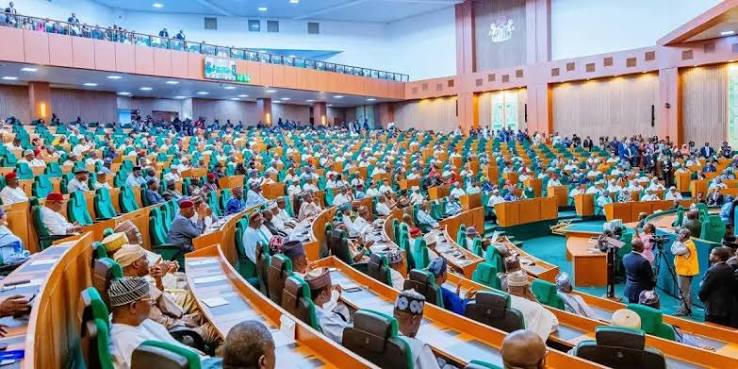
The House of Representatives has urged the Federal Government to prevail on public tertiary institutions to suspend proposed increases in school fees, warning that rising education costs could deny students from low-income families access to higher education.
The lawmakers also called for increased government funding for public universities, polytechnics and colleges of education to reduce their reliance on tuition fees and other charges to finance their operations.
The resolutions followed the adoption of a motion sponsored by the member representing Akoko-South West/Akoko-South East Federal Constituency of Ondo State, Ifeoluwa Ehindero, during Tuesday’s plenary.
The motion, titled “Need to Halt the Recent Increase in School Fees by Public Tertiary Institutions and Its Impact on Nigerian Education Loan Fund,” raised concerns over the consequences of rising tuition fees for students and the sustainability of the Nigerian Education Loan Fund.
Ehindero, who chairs the House Committee on NELFUND, argued that sudden increases in tuition fees could undermine the objectives of the student loan scheme, which was designed around existing tuition benchmarks and institutional cost structures.
“Arbitrary or sudden hikes in fees by institutions will undermine the sustainability, equity and effectiveness of the loan programme,” he said.
The lawmaker expressed concern that several public tertiary institutions across the country had recently increased school fees and other mandatory charges, with some reportedly imposing hikes of more than 100 per cent.
He said the increases had been introduced without adequate consultation or sufficient consideration of the economic difficulties confronting Nigerian households.
According to him, continued increases in tuition and other charges could undermine the loan scheme’s capacity to ensure equitable access to higher education.
“We are worried that if allowed to continue unchecked, these fee increments may create significant disparities in the allocation of education loans, crowd out students from less affluent backgrounds and frustrate the objectives of NELFUND in bridging access to higher education,” Ehindero said.
He further warned that rising education costs could force students to abandon their studies and trigger unrest across campuses if urgent measures were not taken.
The lawmaker said the situation “may lead to increased student dropouts, campus unrest and overall loss of public confidence in Government’s commitment to affordable education.”
Following an overwhelming vote in support of the motion, the House urged the Federal Government to consider increasing financial allocations to public tertiary institutions to reduce their dependence on revenue generated from student charges.
The lawmakers also called on the Federal Ministry of Education and the National Universities Commission to engage the management of the affected institutions and persuade them to suspend fee increases pending a comprehensive review of their tuition structures.
The proposed review, according to the resolution, should ensure that school fees reflect prevailing economic realities while preserving students’ access to higher education.
In addition, the House mandated its Committees on University Education, Federal Polytechnics and Higher Technical Education, and Federal Colleges of Education to investigate the recent increases in fees across public tertiary institutions.
The committees are expected to examine the reasons for the increases, determine whether the additional charges are justified and assess their implications for students, particularly those from low-income households.
The intervention comes amid growing concerns over the affordability of higher education in Nigeria and the ability of the student loan scheme to support students facing rising tuition costs.




