






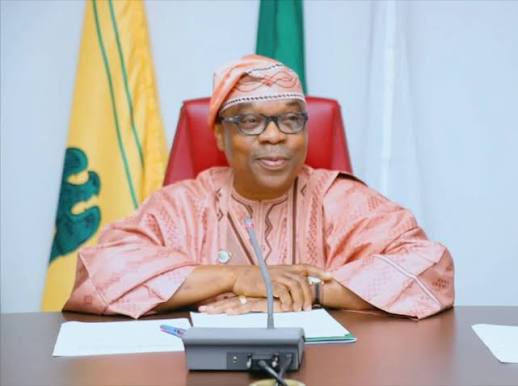
The Federal Government has called for stronger private-sector investment in youth development, technology, small businesses and local manufacturing to accelerate industrialisation, create jobs and improve Nigeria’s economic competitiveness.
The Minister of State for Foreign Affairs, Ambassador Sola Enikanolaiye, said Nigeria needed to move beyond trading raw materials to building industries capable of processing them into finished products for domestic consumption and international markets.
Enikanolaiye made the call during a panel discussion titled “From Trade to Value Chains: Building Regional Industries to Compete Globally” at the 32nd Nigerian Economic Summit, held under the sub-theme, “Invest Nigeria.”
According to a statement issued on Tuesday by the minister’s Special Assistant on Digital Media and Public Diplomacy, Raphael Oni, the minister emphasised that government could not independently provide all the resources required to achieve sustainable economic growth.
He urged the government to deepen its partnership with local businesses and foreign investors to mobilise capital, strengthen industrial capacity and expand employment opportunities.
“Government alone cannot raise the resources needed for shared prosperity. We need partnership with the private sector and mobilisation of capital, not just from foreign sources, but from domestic business, which is also very key,” Enikanolaiye said.
The minister identified Nigeria’s youthful population as a major advantage for economic transformation, arguing that greater investment in education, skills development, entrepreneurship and innovation would help young people contribute more effectively to national productivity.
He called for increased support for small and medium-sized enterprises, technology-driven businesses and creative industries, noting that these sectors could generate employment and improve household incomes.
“We need to invest more in human capital, focusing on small and medium-scale enterprises, technology, innovation and creativity. By so doing, we will be able to generate more employment for the youth and also raise more wealth and income,” he said.
On foreign policy, Enikanolaiye explained that the Federal Government had placed the welfare and prosperity of Nigerians at the centre of its international engagements through its 4D doctrine, which comprises Demography, Development, Democracy and Diaspora.
He stressed that democratic governance should be measured by its ability to deliver economic opportunities and improved living standards rather than being treated as an end in itself.
“Democracy is good, but it is a means to an end, not an end in itself. Democracy must deliver on core priorities of economic development and economic prosperity to our people,” the minister said.
Enikanolaiye also highlighted the importance of macroeconomic stability in attracting investment, saying predictable economic conditions would enable businesses to assess risks, plan operations and make long-term investment decisions.
He said improved stability in key economic indicators, alongside reliable data, would help strengthen investor confidence.
The minister further advocated reforms to make the Ministry of Foreign Affairs more accessible to Nigerians and responsive to the needs of businesses seeking opportunities abroad.
“We have to ensure that the foreign ministry is brought closer to the Nigerian people. We do not operate necessarily in esoteric terms above the people but for the people and with the people,” he said.
He added that partnerships involving governments, businesses and international institutions would be crucial to expanding Nigeria’s industrial base and developing competitive regional supply chains.
Meanwhile, the President of the Economic Community of West African States Commission, General Birame Diop, called for a stronger focus on industrial production, warning that trade agreements alone could not deliver substantial employment or economic growth without supporting industries.
Diop’s position was conveyed by the ECOWAS Commissioner for Economic Affairs and Agriculture, Dehpue Yenpea Zuo, during the same panel session.
“Trade agreements do not create jobs; industries do,” Diop said.
He noted that intra-African trade accounted for about 15 per cent of the continent’s total trade, compared with more than 60 per cent in Europe and Asia, attributing the difference partly to the limited development of regional industries.
The ECOWAS chief said the regional market, with more than 300 million consumers, provided Nigerian manufacturers with an opportunity to expand production and establish stronger commercial links across West Africa before exploring wider opportunities under the African Continental Free Trade Area.
He identified four priorities for accelerating regional industrialisation: implementing existing trade agreements, particularly commitments on border management; developing value chains in sectors where West Africa enjoys competitive advantages; improving access to finance for businesses and producers; and measuring progress through employment creation and the volume of goods processed within the region.
Diop maintained that translating regional trade commitments into productive industrial activities would be essential to expanding employment, increasing economic activity and strengthening West Africa’s position in global markets.




