




President Bola Tinubu has insisted that Nigeria cannot afford to resume petrol subsidy payments, warning that reversing the policy could push the country towards bankruptcy.
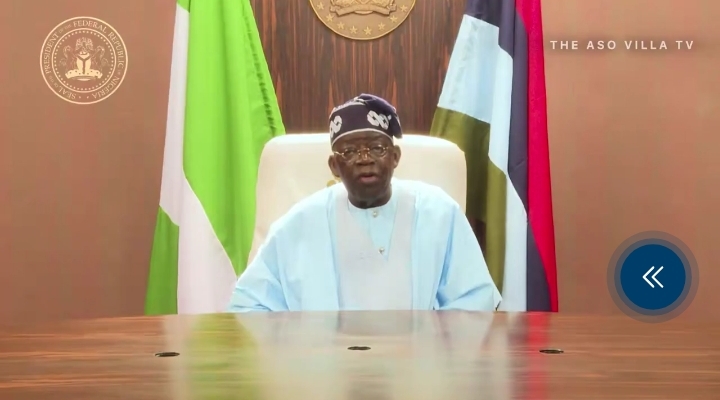
Tinubu stated this on Monday while addressing members of the City Boy Movement, dismissing calls by his political opponents for the restoration of the subsidy.
The President maintained that his administration had taken a necessary economic decision by ending the policy, which he said the country could no longer sustain financially.
“With your ideas, I came and I removed subsidy the first day. No, Nigeria will go bankrupt. There is nothing left to pay subsidy,” he said.
Tinubu said he was aware that some opposition politicians had promised to restore the subsidy but insisted that Nigeria must not return to its previous economic policies.
“I listen to my political opponents promising a return to subsidy,” the President added.
Drawing from biblical and Quranic accounts of Moses, also known as Musa in Islam, leading the Israelites out of Egypt, Tinubu likened calls for the restoration of petrol subsidy to asking the biblical figure to reverse his journey.
He argued that Nigeria must maintain its chosen economic direction rather than return to a policy his administration considers unsustainable.
“Most of all, sometimes I remember my scriptural studies, both in the Bible and in the Holy Koran. When Moses and Musa left Egypt, they faced the challenge and the Red Sea parted and gave way.
“You cannot ask Moses to go back to Egypt. We will campaign with ideas and original thoughts and deep thinking to move this country forward. With your energy, your support, never will we go back to Egypt,” Tinubu said.
The President announced the removal of petrol subsidy during his inauguration on May 29, 2023, declaring that “fuel subsidy is gone.”
The decision triggered an increase in petrol prices, with consequential rises in transportation costs and the prices of goods and services, adding to the financial pressures on households and businesses.
The policy has remained a major subject of national debate as Nigerians continue to grapple with the rising cost of living, while opposition figures have criticised aspects of the administration’s economic reforms.
Earlier this month, the Minister of Finance and Coordinating Minister of the Economy, Taiwo Oyedele, warned that restoring the subsidy could push petrol prices to at least ₦2,000 per litre and weaken the naira to about ₦3,000 to the dollar within months.
Oyedele argued that renewed subsidy payments would place additional pressure on government revenue and further strain the economy.
Meanwhile, the Federal Government has defended a recent intervention by the Nigerian National Petroleum Company Limited to cushion the effects of rising petrol prices, insisting that the measure did not amount to a reversal of the subsidy-removal policy.