




The Senate has urged the South-East Development Commission (SEDC) to prioritise infrastructure development and ensure its interventions translate into tangible benefits for residents across the region’s five states.
The Chairman of the Senate Committee on the South-East Development Commission, Senator Orji Uzor Kalu, gave the charge during an oversight visit to the commission in Enugu State to assess its facilities, programmes and operational readiness.
Kalu expressed satisfaction with the progress recorded by the commission, but stressed the need for its management to move beyond administrative preparations and deliver projects that would directly benefit communities across Abia, Anambra, Ebonyi, Enugu and Imo states.
He urged the commission to sustain its progress ahead of another oversight visit scheduled for December, emphasising that its performance would be measured by its impact on the people.
The committee’s visit followed a briefing by the Managing Director of the SEDC, Mark Okoye, who disclosed that the commission was advancing preparations for strategic projects designed to accelerate economic growth and improve infrastructure across the South-East.
According to Okoye, the proposed interventions include gas pipeline and railway projects, with the commission engaging federal ministries, departments and agencies, state governments, development partners and private-sector operators to promote coordinated regional development.
He also identified the South-East Vision 2050 stakeholder consultations as a major step towards developing a long-term blueprint for the region.
The consultations brought together government officials, business leaders, academics, development partners and civil society organisations to contribute to a coordinated development agenda.
Okoye further disclosed that 25 start-ups from the five South-East states had received equity investments under the South-East Venture Capital Programme, an initiative designed to encourage entrepreneurship, innovation and business growth through a competitive selection process.
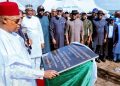
During the visit, the senators also inspected the commission’s temporary headquarters and its newly established headquarters in Enugu, examining the office facilities, furnishings and information and communications technology infrastructure to determine their readiness for full operations.
The delegation also paid a courtesy visit to Enugu State Governor Peter Mbah, who urged the commission to prioritise a regional gas pipeline, an inter-state railway network and other projects capable of accelerating industrialisation.
Mbah said the proposed infrastructure would improve connectivity among the five states, facilitate the movement of goods and people, stimulate economic activities and strengthen regional integration.
“If we are able to have a high-pressure gas pipeline across all the major cities in the South-East, I know that the SEDC is a veritable platform that can essentially execute a project of that scale,” the governor said.
He also proposed a railway network linking major cities across the region, urging the South-East states to work together on a common development plan.
“We are hoping that, given the coming into effect of the SEDC, we will be able to use it as a platform to bring all the other states together to have a common design on the South-East railway line,” Mbah added.
The governor called on the National Assembly to provide adequate funding for the commission, describing it as an important institution for addressing the region’s infrastructure and economic development needs.
He also highlighted the importance of supporting agriculture and technology-driven businesses, including initiatives that would enable young entrepreneurs to expand their operations and create jobs.
The Senate committee’s oversight exercise forms part of its responsibility to monitor the commission’s activities, assess its operational capacity and ensure accountability in the use of public resources.
Established to drive reconstruction, economic development and regional transformation, the SEDC is expected to address infrastructure gaps and promote sustainable economic growth across the five South-East states.