




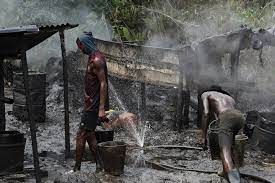
The number of Delta State communities affected by the oil spill along the Trans-Forcados pipeline has risen from 86 to 216, Governor Sheriff Oborevwori has disclosed.
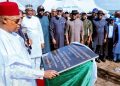
Oborevwori made the disclosure on Tuesday during an inspection visit to Odidi community in Warri South-West Local Government Area, where he ordered immediate medical intervention for residents affected by the pollution.
The governor directed the Commissioner for Health to deploy medical teams to the affected communities to assess residents and determine the health implications of prolonged exposure to the pollution.
He also directed Heritage Energy Operational Services Limited, the operator of the pipeline, to deploy its own medical team and provide relief materials to the affected communities.
Oborevwori said the scale of the incident had become too serious to be treated casually, stressing the need for immediate action to protect residents.
“We have to take this matter seriously. Once you see what is happening, you realise that it is a very big issue. We don’t want our people dying at this time. We cannot afford to lose our focus or waste time. We have to act quickly and decisively,” he said.
The governor said the intervention would go beyond the distribution of relief materials, noting that residents needed to undergo medical examinations because of the possible health consequences of the pollution.
“The medical teams will visit the affected communities, assess the environmental and health impact and determine appropriate intervention,” he stated.
Oborevwori said the government would also pursue dialogue between the oil operator and the host communities to resolve the crisis and prevent further tension.
“Meaningful engagement is necessary to resolve the crisis and prevent further tension,” he said.
He disclosed that the initial assessment had put the number of affected communities at 86 but that further assessment had increased the figure to 216.
“While the initial assessment showed that about 86 communities were affected, the number has now risen to 216,” the governor said.
According to him, the operating company had assured the state government that the technical process would be concluded and the cleanup completed before the end of October.
He said the affected communities would thereafter be engaged on compensation and other measures, warning that the company’s commitments must be honoured.
The governor also lamented the impact of the pollution on fishing, which he identified as the major source of livelihood for many residents in the affected communities.
He said the pollution had caused fish scarcity and increased prices, further worsening the economic difficulties faced by residents.
Oborevwori stressed that the crisis was not solely about compensation but also about restoring the environment, protecting lives and safeguarding the livelihoods of affected communities.
“The crisis is not merely about compensation. It is about restoring the environment, protecting human lives and safeguarding the livelihoods of the affected people,” he said.
As part of immediate measures to support Odidi community, the governor approved the construction of a landing jetty and directed the Chairman of Warri South-West Local Government Area to build a modern health centre for the community.
He also directed the Commissioners for Oil and Gas, Chief Peter Uviejitobor, and Environment, Moses Ogodo, to monitor the implementation of his directives to the oil company and report back to him.
Meanwhile, the General Manager, Operations Integrity, Heritage Energy Operational Services Limited, Nelson Wilbert, said the company was committed to working with the state government, host communities, the Nigerian Upstream Petroleum Regulatory Commission and other stakeholders to resolve the crisis.
Wilbert said the immediate priority was to complete ongoing technical operations, including installation, stopping the spill and pressure testing, to safely restore normal operations.
He added that the company would work with regulatory authorities and affected communities to assess the environmental damage, clean up impacted areas and provide appropriate compensation.
However, the President of the Ijaw Youth Council, Dr Doubra Okotete, called for urgent action to halt the pollution, alleging that crude was still being pumped through leaking pipelines.
Okotete urged the authorities and oil operators to undertake comprehensive remediation and compensate affected residents.
He also called for increased medical support for residents, particularly those suffering from respiratory problems.