




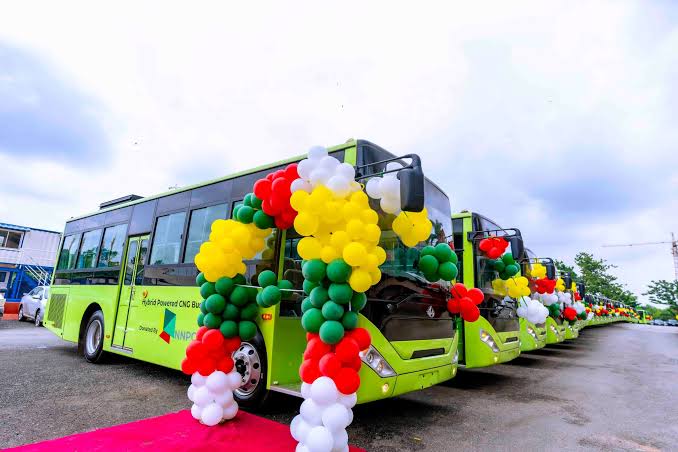
The Federal Government has reaffirmed its commitment to reducing transportation costs for Nigerians through the expansion of Compressed Natural Gas, CNG, as a cheaper and cleaner alternative to conventional fuels.
The Minister of State for Petroleum Resources (Gas), Ekperikpe Ekpo, said the Federal Government was accelerating the adoption of CNG across the country to ease the burden of high transportation costs on commuters, transporters and fleet operators.
Ekpo disclosed that more than $2 billion in private sector investment had been secured since the Federal Government launched the CNG Initiative in 2023.
He said the programme had also recorded significant progress in vehicle conversion, infrastructure development and job creation.
According to the minister, more than 120,000 vehicles have so far been converted to run on CNG through over 400 conversion centres established across the country.
He added that more than 90 CNG refuelling stations were currently operational nationwide, while thousands of Nigerians had benefited from employment and technical training opportunities created by the initiative.
“Since the launch of the CNG Initiative in 2023, more than $2 billion in private investment has been secured, over 120,000 vehicles have been converted through more than 400 conversion centres, and more than 90 CNG refuelling stations are now operational nationwide,” Ekpo said.
The minister further disclosed that about 7,700 technicians had been trained under the programme, while more than 10,000 jobs had been created in the emerging CNG value chain.
He said commuters, commercial transporters and fleet operators were already recording significant savings in fuel costs as more vehicles transitioned from petrol and diesel to compressed natural gas.
Ekpo commended President Bola Ahmed Tinubu for directing the establishment of an additional 500 CNG refuelling stations across the country.
He said the planned expansion would further strengthen the infrastructure required to support the Federal Government’s target of widening access to the alternative fuel.
“The establishment of additional CNG refuelling stations will significantly expand access to the fuel and further support efforts to reduce transportation costs for Nigerians,” the minister said.
Ekpo urged state governments to support and key into the Federal Government’s CNG programme by encouraging investment and facilitating the development of conversion and refuelling infrastructure in their respective states.
According to him, wider adoption of CNG would not only help reduce transportation costs but also promote cleaner energy, create jobs and strengthen Nigeria’s gas-based economy.
“We urge state governments and other stakeholders to embrace the CNG initiative because wider adoption will translate into lower transportation costs, greater energy security, job creation and improved economic opportunities for Nigerians,” he said.
The Federal Government has continued to promote CNG as a major component of its energy transition and transportation strategy, particularly following the removal of petrol subsidy and the subsequent rise in fuel and transportation costs across the country.