




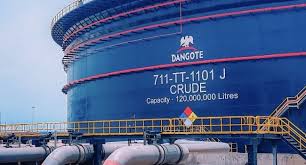
Dangote Petroleum Refinery has resumed the loading of Premium Motor Spirit (PMS), popularly known as petrol, in naira after a week-long suspension, ending uncertainty in Nigeria’s downstream petroleum sector and restoring supply to marketers across the country.
The refinery, however, increased its ex-depot (gantry) price to N1,215 per litre, representing a N140 increase or 13.02 per cent above its previous price of N1,075 per litre.
The development comes days after the 650,000 barrels-per-day refinery temporarily suspended naira-denominated truck loading amid concerns over crude oil supply under the Federal Government’s naira-for-crude arrangement, forcing many marketers to source products from private depots at higher costs.
Industry sources confirmed that marketers have been notified of the resumption of gantry operations, with product loading commencing immediately under the revised pricing structure.
The latest price adjustment is linked to the sharp rise in global crude oil prices, which has significantly increased the cost of refining petroleum products worldwide.
Market data showed that Brent crude, Nigeria’s benchmark crude, rose to $93.90 per barrel, while West Texas Intermediate (WTI) climbed to $86.65 per barrel, reflecting growing pressure on fuel prices across international markets.
The refinery had earlier resumed coastal sales of petrol at a higher rate, increasing its coastal loading price from $1,044.62 per metric tonne to $1,161.23 per metric tonne, an increase of about 11.2 per cent.
The return to naira-denominated sales is expected to improve product availability nationwide after supply disruptions triggered by the suspension, which tightened supply and pushed depot prices upward.
Before the resumption, independent marketers were forced to rely heavily on private depots, resulting in ex-depot petrol prices in Lagos climbing as high as N1,275 per litre, compared to Dangote Refinery’s previous gantry price of N1,075 per litre.
The refinery had attributed the temporary suspension to challenges in securing sufficient crude oil supplies under the naira-for-crude initiative, a policy introduced by the Federal Government to reduce pressure on foreign exchange demand and support domestic refining.
Industry stakeholders believe the restoration of naira transactions will ease supply constraints in the inland market and strengthen nationwide distribution of petroleum products, although consumers may continue to face higher pump prices due to rising global crude costs.
The development has already triggered fresh increases in fuel prices across major depots and retail outlets nationwide.
Data from petroleum depots on Wednesday showed that petrol prices rose across key supply hubs, including Lagos, Port Harcourt, Warri and Calabar, with some depots recording increases of up to N87 per litre.
The sharpest increase was recorded at Bulk Strategic Reserve in Lagos, where the ex-depot price jumped from N1,263 per litre to N1,350 per litre.
Other major depots, including Liquid Bulk, Masters Energy, Matrix and Sigmund, also adjusted their prices upward to about N1,280 per litre, reflecting the broader market response to rising supply costs.
The increase at the depot level has begun to affect retail prices, with several filling stations in Lagos and surrounding areas raising pump prices from about N1,260 per litre to between N1,300 and N1,400 per litre.
Analysts warn that sustained increases in petrol prices could further drive up transportation fares, food prices and operating costs for businesses, adding to inflationary pressures already facing households and industries.
The latest adjustment underscores the growing influence of international crude oil prices on Nigeria’s deregulated downstream petroleum market, where refiners and marketers increasingly align domestic prices with global market realities.