





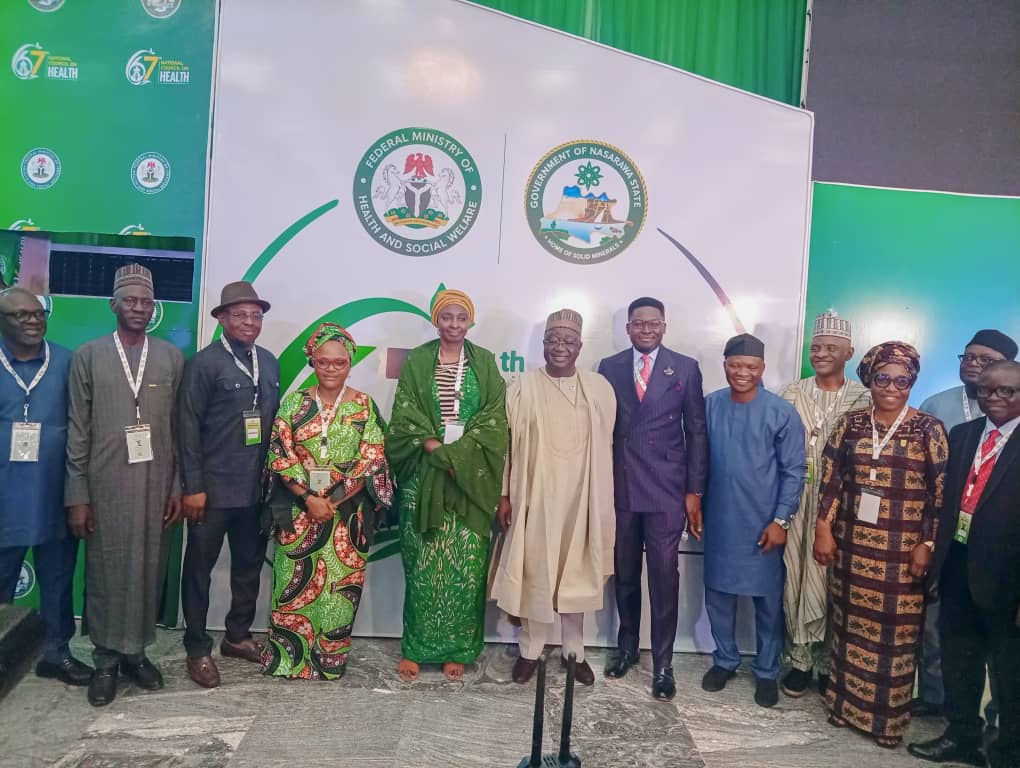
The Nasarawa State Deputy Governor, Dr Emmanuel Akabe, has challenged participants at the 67th National Council on Health to prioritise practical solutions that will translate government policies and commitments into improved healthcare delivery across the country.
Akabe gave the charge on Monday while declaring open the technical session of the 67th National Council on Health in Lafia, the Nasarawa State capital.
He said the success of the Council should be measured by its ability to produce concrete recommendations capable of addressing challenges in the health sector and improving access to quality healthcare for Nigerians.
Representing Governor Abdullahi Sule, the Deputy Governor expressed confidence that discussions under the theme, “From Commitment to Results: Delivering Quality and Equitable Healthcare for All Nigerians,” would provide a platform for developing workable solutions to the country’s healthcare challenges.
He stressed the importance of ensuring that resolutions reached at the meeting did not remain policy statements but were translated into measurable outcomes.
Akabe, a former Commissioner for Health in Nasarawa State between 2011 and 2015, said his experience with the Council’s activities had reinforced the importance of sustained collaboration among federal and state governments in strengthening healthcare delivery.
He also commended the Federal Ministry of Health and Social Welfare for selecting Lafia to host the meeting, describing it as an opportunity for the state to demonstrate its hospitality and peaceful environment.
Earlier, the state Commissioner for Health, Dr Gwamna Gaza, called on delegates to make meaningful contributions to the deliberations, emphasising the importance of the decisions they would take in shaping the country’s healthcare system.
Gaza recalled that Nasarawa State was unanimously selected to host the 67th Council during the previous meeting in Calabar, Cross River State, approximately 12 months ago.
He described the hosting arrangement as a historic opportunity for the state to receive health sector leaders from across the federation for the first time.
The commissioner urged participants to remain conscious that they were not only policymakers but also beneficiaries of the healthcare policies and reforms being developed for Nigerians.
He assured delegates of the state government’s commitment to providing a conducive environment for the meeting and encouraged them to report any challenges requiring attention during their stay.
Providing details of the technical proceedings, the Permanent Secretary of the Federal Ministry of Health and Social Welfare and Chairman of the Technical Committee, Daju Kachollom S. mni, said the November 16–17 technical session was designed to lay the groundwork for the main Council meeting scheduled for November 19–20, 2026.
She explained that the committee would examine the implementation of resolutions from the 66th Regular National Council on Health, review memoranda submitted by federal and state institutions, and develop recommendations for consideration by the Council.
Kachollom disclosed that the memoranda were organised around four major pillars of the Health Sector Strategic Blueprint: effective governance; an efficient, equitable and quality health system; unlocking value chains; and health security.
She said discussions would cover implementation of the National Health Act, multisectoral health interventions, clinical research and development, as well as strategies for strengthening Nigeria’s preparedness and response to public health emergencies.
The identified health threats include cholera, Lassa fever, cerebrospinal meningitis and measles.
To ensure effective consideration of the submissions, she said authors would be allowed five minutes each to present the objectives, major issues and recommendations contained in their memoranda.
“The Secretariat will subsequently consolidate the Technical Committee’s recommendations for consideration by the Council,” she said.
The Permanent Secretary also disclosed that the ministry had adopted an electronic documentation system for the Council, with relevant meeting materials uploaded onto tablets distributed to participants.
She urged delegates to utilise the digital platform and assured them of technical assistance from the Council’s Secretariat and ICT team.
The technical session will also examine strategies for improving primary healthcare delivery, strengthening data-driven decision-making and digital health, monitoring the implementation of previous Council resolutions and addressing inequalities in access to quality healthcare, particularly among vulnerable populations.
The technical committee’s recommendations are expected to form the basis of deliberations at the main 67th National Council on Health meeting later this week.