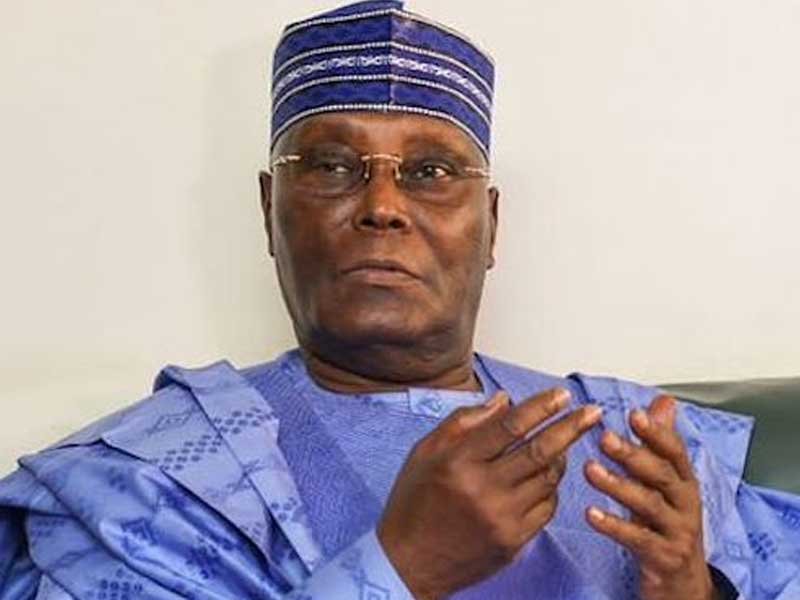
Former Vice President and African Democratic Congress presidential candidate, Atiku Abubakar, has called for an immediate increase in Nigeria’s minimum wage, arguing that the current ₦70,000 wage floor has been eroded by rising costs of food, fuel, transportation, rent and other essential goods.
Atiku said the Federal Government’s economic policies had placed an excessive burden on workers, particularly following the removal of the petrol subsidy, which he said triggered significant increases in the cost of living without adequate protection for low-income households.
He made the position known in a statement issued by the Director of Strategic Communication of the ADC Presidential Campaign Council, Phrank Shaibu.
Atiku said the increase in the minimum wage from ₦30,000 to ₦70,000 had failed to restore workers’ purchasing power, using petrol prices to illustrate the impact of inflation on wages.
“At ₦1,400 a litre, the entire ₦70,000 monthly minimum wage buys just 50 litres of petrol. What does the worker take home to feed the children? What pays the rent? What gets that worker back to work on Monday?” he asked.
According to him, the purchasing power of the minimum wage has declined significantly despite the nominal increase in workers’ pay.
He said the national average petrol price stood at ₦254.06 per litre in April 2023, meaning that the then ₦30,000 minimum wage could purchase about 118 litres of petrol, compared with about 50 litres for the current ₦70,000 wage at ₦1,400 per litre.
“The payslip has grown, but the fuel it can buy has more than halved. Tinubu has given workers a larger number and left them with a smaller life. That is hardship dressed up as a wage increase,” Atiku said.
The ADC candidate also compared Nigeria’s minimum wage with those of selected oil-producing and African countries, saying the Nigerian wage floor remained relatively low when converted using exchange rates as of July 24, 2026.
He cited Libya’s minimum wage as being worth approximately ₦213,000, Algeria’s ₦245,000, Equatorial Guinea’s ₦302,000 and Gabon’s ₦351,000, while also stating that the minimum wage in neighbouring Benin Republic was higher than Nigeria’s after conversion.
Atiku, however, acknowledged that wage structures and living costs vary from one country to another, but argued that such differences did not make ₦70,000 sufficient for Nigerian workers facing current prices.
“The Nigerian worker is the engine of this country’s productive life, yet Tinubu expects that engine to run without fuel,” he said.
He further argued that the impact of petrol prices extended beyond transportation, saying higher energy costs affected food production, businesses and household expenses.
“Petrol does not stay at the pump. Its price follows the farmer to market, enters the baker’s oven and appears in the fare a parent pays to take a child to school. Government then announces a wage increase and watches those costs swallow it before the month has begun,” Atiku said.
The former vice president challenged President Bola Tinubu to approve a substantial increase in the minimum wage, saying any adjustment should reflect the prevailing cost of food, transportation, housing and electricity.
“If he has no intention of raising workers’ pay, he should say so plainly and stop stringing the Nigeria Labour Congress and other labour leaders along. Nigerian workers deserve an answer, not another round of meetings that ends where it began,” he said.
Atiku also pledged that, if elected, his administration would begin efforts to raise the wage floor from its first day in office.
He said his proposed policies would include measures to support domestic production, provide relief at the pump and introduce targeted assistance for Nigerians most affected by the cost-of-living crisis.
“Tinubu has eight months left in this term. Nigerian workers cannot be told to endure eight more months of hunger while his government debates whether their wages are enough,” Atiku said.
He added that his administration would pursue a targeted production subsidy for petroleum products refined in Nigeria and sold to Nigerians, subject to spending limits, public accounting and independent auditing.
According to him, such government intervention must translate into measurable reductions in the cost of petroleum products rather than becoming another avenue for waste.
Atiku also reaffirmed his commitment to wage adjustments, targeted social protection and measures aimed at stabilising the prices of essential goods and energy.
“Nigerians do not eat FAAC figures. A full treasury is no answer to an empty kitchen. The test of this government is whether the men and women who work all month can live on what they earn,” he said.
“A living wage must buy a living. It is not a privilege; it is a basic right,” Atiku added.
The statement was signed by Phrank Shaibu, Director of Strategic Communication, ADC Presidential Campaign Council.