




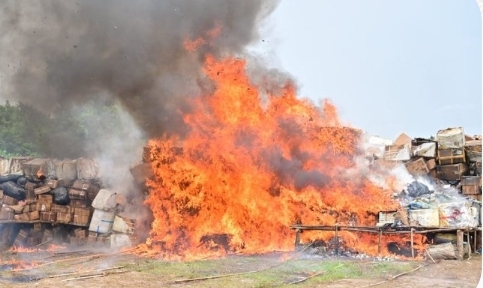
The National Agency for Food and Drug Administration and Control has destroyed counterfeit, expired and substandard products valued at ₦2.6bn in Rivers State, warning that it will intensify efforts to rid the country of unsafe medicines and food items.
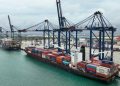
The seized products, including medicines, tomatoes, cookies and chemicals, were intercepted by the Nigeria Customs Service at the Onne Port between 2025 and 2026.
The destruction exercise took place in Port Harcourt on Friday as part of efforts by the two agencies to prevent the circulation of products considered dangerous to public health.
Speaking at the event on behalf of NAFDAC Director-General, Prof. Mojisola Adeyeye, the Chairman of the Federal Task Force on Counterfeit, Fake Drugs and Unwholesome Processed Foods in Nigeria, Dr Martins Iluyomade, said the exercise demonstrated the agency’s determination to protect Nigerians from harmful products.
Iluyomade, who is also NAFDAC’s Director of Investigation and Enforcement, commended the Customs Service for its collaboration with the agency, noting that the successful destruction followed months of coordination between both organisations.
“This gesture corroborates the existing good relationship we have between NAFDAC and Nigeria Customs Service. We have an MoU signed, but we have people who have to work behind the scenes to make sure that the MoU works,” he said.
He added that the commitment of personnel from both agencies had helped translate their agreements into concrete action against counterfeit and substandard products.
“The willingness of the officers of the two agencies to make the MoU work is what has led to what we are doing today,” Iluyomade stated.
The NAFDAC official acknowledged that the process had encountered some challenges but said the determination of officers from both agencies had helped overcome the difficulties.
He also appreciated the Comptroller-General of Customs for facilitating the handover of the seized consignment for destruction.
“On this note, I want to thank the Comptroller-General of Customs, who made it a point of duty for us to come together, personally, to come and hand over this container,” he said.
Iluyomade disclosed that Friday’s exercise represented the first phase of the destruction, with additional containers of seized products expected to be processed.
He urged the Customs Service to expedite the release and transfer of the remaining consignments to ensure their timely destruction.
“What you see here right now, this is the flag-up, others are still coming out of the port, and I want to urge the Nigerian Customs Service to quickly facilitate the remaining containers to be here on time for destruction,” he added.
Reaffirming the agency’s public health mandate, Iluyomade said NAFDAC would continue working to ensure that consumers had access to safe food and effective medicines.
“For all Nigerians, our work is to safeguard the health of the nation, and we will not relent on our task to make sure that this assignment of keeping all Nigerians safe, eat good food, take the right medicines that work is not delayed,” he said.
He further pledged that the agency would intensify its enforcement activities to prevent dangerous products from reaching consumers.
The task force chairman also called for stronger cooperation among government agencies involved in combating counterfeit medicines, substandard goods and other illicit activities.
According to him, the scale of the challenge makes it difficult for any single agency to tackle the problem independently, stressing the need to avoid rivalry and promote coordinated enforcement.
He urged members of the public to assist the campaign by reporting suspected counterfeit products through NAFDAC’s designated reporting channels.
Meanwhile, Superintendent of Customs Elizabeth Abosede, who represented the Enforcement Unit of the Nigeria Customs Service, Area II Command, commended NAFDAC for the destruction exercise.
Abosede also expressed concern about the health dangers associated with fake and counterfeit medicines, underscoring the importance of cooperation between regulatory and enforcement agencies.
Earlier, the South-South Zonal Director of NAFDAC, Oligbu Chukwuma, represented by his deputy, Mrs Rita Chukwuma, said the exercise formed part of the agency’s regulatory responsibilities.
She explained that the products earmarked for destruction included items intercepted by NAFDAC as well as those voluntarily surrendered by organisations.
According to her, the exercise was designed to remove fake, expired and substandard goods from circulation and protect communities from the potential harm associated with their consumption or use.